
A chimney is more than just a part of your home’s design. It safely channels smoke, fumes, and moisture out of your property. Yet, problems often start quietly, hidden beneath the surface. If left unchecked, they can grow into expensive repairs or even safety hazards. Homeowners and business owners should know how to recognize early signs of chimney masonry repair needs so small issues don’t become major problems.
In this article, we will explain how to identify hidden damage, what causes it, and how to take action before it affects your property.
Why It’s Important to Spot Damage Early
Chimneys deal with extreme conditions. Rain, snow, wind, and heat from fires can all affect the masonry, mortar, flashing, and flue liner. What begins as a small crack or leak can expand over time and lead to serious problems. Early detection is key because these issues often start subtly. By spotting them early, you can protect your property and avoid costly repairs.
Signs of Hidden Chimney Damage
Here are the most common warning signs that your chimney may need attention even if it looks fine from the outside.
Cracks in the Masonry and Mortar
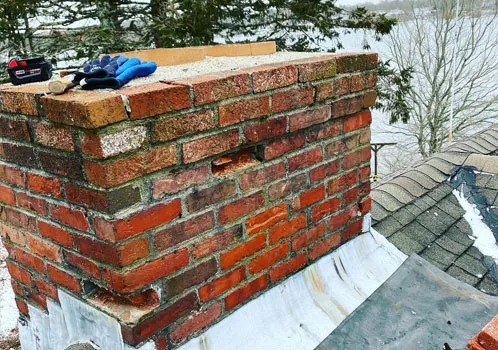
Cracks are one of the most common indicators of hidden damage. You might see small lines between bricks or across the surface. These cracks allow water to seep into the chimney, which can expand when it freezes and worsen the damage. Over time, cracks can lead to crumbling mortar or loose bricks, making brick chimney repair necessary.
White Stains on the Bricks
If you notice white, chalky marks on your bricks, this is called efflorescence. It happens when moisture draws salts from inside the bricks or mortar to the surface. This is more than just a cosmetic issue. It shows that water is entering your chimney and could eventually cause bigger problems like crumbling bricks or leaks.
Flaking or Broken Bricks
Spalling happens when bricks start to flake, chip, or break. This is usually caused by water entering the bricks and freezing. Spalling weakens your chimney both structurally and visually. If you notice flaking bricks, it’s a sign that repairs are needed before the damage becomes worse.
Water Leaks and Stains
Water can cause damage both inside and outside your home. Watch for:
- Dark streaks on the chimney
- Stains on walls or ceilings near the fireplace
- Damp or musty smells inside
These signs show that water has penetrated the masonry and could damage the framing, cause mold, or affect your home’s finishes.
Rust on Metal Parts
Chimneys have metal components like dampers, fireplace parts, and caps. Rust or corrosion on these parts indicates moisture is getting in. Over time, rust can prevent these parts from sealing correctly, which can make your chimney less safe and less efficient.
Strange Noises or Blockages
Damage inside your chimney can also cause airflow problems. You might notice whistling sounds, debris falling, or even small animals nesting. These noises are warnings that the chimney needs professional inspection.
Smoke Coming Into the House
If smoke from your fireplace enters your living space instead of going outside, it could mean there is a blocked flue, damaged liner, or misalignment in the chimney structure. Smoke inside your home is a serious health risk and should not be ignored.
Leaning or Shifted Chimney
If your chimney looks like it is leaning or slightly off-center, it could indicate foundation movement or significant masonry problems. Any leaning chimney should be addressed immediately by a professional.
Common Causes of Chimney Damage
Understanding why damage happens helps you prevent it. Common causes include:
Moisture and Weather
Rain, snow, and freezing temperatures cause water to enter tiny cracks. Over time, the freeze and thaw cycles can seriously damage masonry.
Aging Materials
Even high-quality bricks and mortar deteriorate with age.
Damaged Flashing
Flashing that is cracked or pulled away from the roof allows water to seep behind the chimney.
Missing or Broken Chimney Caps
Without a cap, rain, animals, and debris can enter and damage the flue liner and masonry.
Creosote Buildup
Creosote is the residue left from burning wood. If it builds up excessively, it can corrode flue liners and masonry surfaces.
How to Detect Hidden Damage
Even small problems can be noticed with careful inspection. Regular checks help you catch issues early.
DIY Inspections Every Few Months
- Walk around the chimney and look for cracks or stains
- Use binoculars to inspect higher areas
- Check metal parts for rust or looseness
- Look for water stains or discoloration inside your home
- Listen for unusual noises with the fireplace open
Professional Inspection Once a Year
A certified chimney expert can inspect your flue and masonry in detail. Professionals can detect problems you might not see, such as internal cracks or liner damage.
Simple Steps to Prevent Major Problems
- Keep the chimney cap in good condition
A properly fitted cap keeps out rain, debris, and animals. - Check flashing regularly
Fix any gaps or rusted areas to prevent leaks. - Repair mortar joints before they fail
Tuckpointing damaged mortar prevents bigger structural problems. - Use a waterproofing sealant
Applying a sealant helps keep water out while letting the masonry breathe. - Clean the chimney regularly
Removing creosote and debris improves airflow and allows you to spot early damage.
These steps, combined with yearly inspections, will keep your chimney safe and functional.
Conclusion
Have you seen white stains, cracked mortar, or rusted metal on your chimney? Catching hidden damage early protects your property and prevents costly brick chimney repair.
Whether you own a small business, local enterprise, or B2B company in Mashpee, keeping your chimney in good condition ensures safety and long-term value. Brick veneer installation can improve the appearance of your home, but the structural health of your chimney must always come first.
Diamond Touch Masonry provides trusted chimney repair service in the United States. Their experienced team handles everything from minor tuckpointing to complete masonry restoration, helping property owners maintain safe and strong chimneys.
Frequently Asked Questions
How often should a chimney be inspected?
Inspect it at least twice a year, especially before heavy use or after storms.
Can small cracks turn into big problems?
Yes. Water enters tiny cracks, freezes, and makes them worse over time.
Is chimney repair expensive?
The cost depends on the severity. Catching issues early reduces repair costs.
What is the difference between cleaning and repair?
Cleaning removes soot and creosote. Repair fixes structural problems. Both are important.
Can chimney repairs be done at home?
Minor maintenance is possible, but major repairs should be done by a professional.