
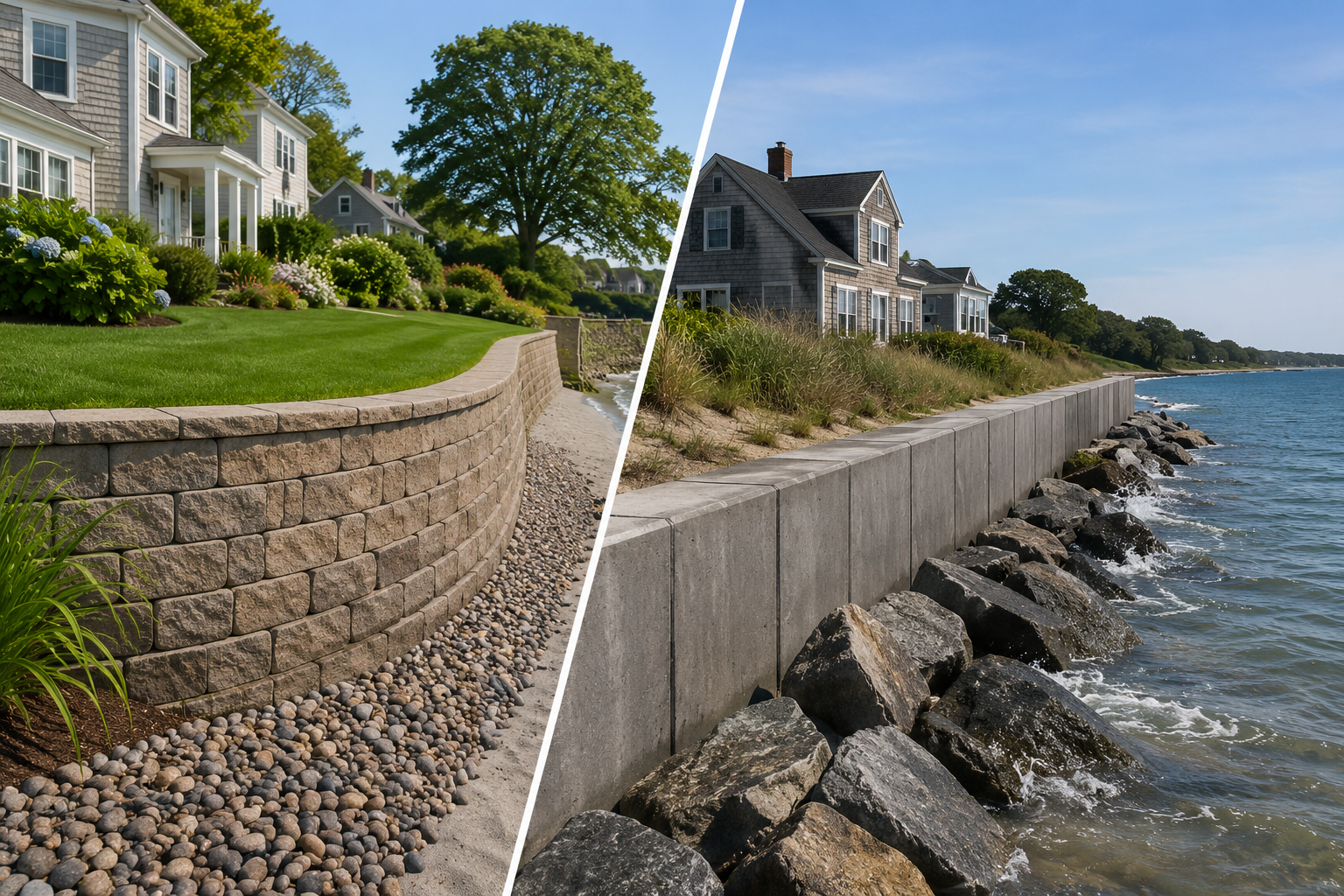
Cape Cod is one of the most beautiful coastal areas in Massachusetts. Many homes and commercial properties enjoy amazing views, but they also face challenges from changing weather, heavy rain, strong winds, and coastal erosion. These conditions can slowly damage your landscape if it is not protected properly.
Many property owners wonder whether they should install a retaining wall or a seawall. Although both structures help protect land, they are built for different purposes. Understanding the difference can help you make the right investment for your property.
If you are planning retaining wall construction in Cape Cod, this guide explains how retaining walls and seawalls work, their benefits, and which option may be the better choice.
What Is a Retaining Wall?
A retaining wall is a structure that holds soil in place on sloped land. It helps prevent soil from washing away during heavy rain while creating flat and usable outdoor spaces.
Retaining walls are commonly used for gardens, patios, walkways, driveways, and landscaped yards. They also improve the appearance of a property while helping reduce erosion problems.
Many Cape Cod properties have uneven ground, making retaining walls a practical solution for both safety and landscaping.
What Is a Seawall?
A seawall is built along the shoreline to protect land from waves, tides, and storm surges. Instead of supporting soil on a hill, it acts as a barrier between the ocean and your property.
Seawalls are often installed on waterfront homes, commercial buildings, marinas, and coastal properties that experience regular wave action.
Because they face constant pressure from water, seawalls are built with stronger materials and engineering methods than standard retaining walls.
Main Difference Between a Retaining Wall and a Seawall
- The biggest difference is the problem they solve.
- A retaining wall controls soil movement on sloped land.
- A seawall protects coastal property from water and wave damage.
If your property is experiencing erosion because of rain or uneven ground, a retaining wall is usually the better choice. If waves are causing damage along the shoreline, a seawall offers better protection.
When Should You Choose a Retaining Wall?
A retaining wall is ideal when your property has sloped areas that make landscaping difficult.
You should consider a retaining wall if you notice:
- Soil washing away after heavy rain
- Uneven outdoor spaces
- Sloped driveways
- Garden beds losing soil
- Small landslides on your property
- Cracks caused by shifting ground
Professional retaining wall construction in Cape Cod can improve both the appearance and stability of your outdoor space.
When Is a Seawall the Better Choice?
A seawall is recommended for properties located directly next to the ocean or other large bodies of water.
A seawall may be the right solution if:
- Waves regularly reach your property.
- Storms cause shoreline erosion.
- High tides damage landscaping.
- Coastal flooding is becoming more common.
- The shoreline continues to move closer to your home.
Since shoreline projects often require permits, it is important to work with experienced professionals who understand local regulations.
Popular Materials for Retaining Walls
Several materials are commonly used for retaining walls in Cape Cod.
Natural Stone
Natural stone is a popular choice because it blends well with the local landscape. It offers a classic appearance and can last for many years with proper installation.
Concrete Blocks
Concrete blocks are durable, affordable, and available in different colors and styles. They work well for both residential and commercial properties.
Poured Concrete
Poured concrete is often selected for taller retaining walls that require additional strength and stability.
Common Seawall Materials
Seawalls must withstand constant exposure to water and weather.
Popular materials include:
- Reinforced concrete
- Natural stone
- Steel sheet piling
- Vinyl sheet piling
The right material depends on the property’s location, wave conditions, and project budget.
Why Drainage Is So Important
Good drainage is one of the most important parts of any retaining wall project.
Rainwater collects behind the wall over time. Without proper drainage, water pressure builds and may cause the wall to lean, crack, or fail.
Professional contractors install drainage systems that allow water to move safely away from the structure. This helps extend the life of the wall and reduces future repair costs.
Maintenance Tips
Both retaining walls and seawalls should be inspected regularly.
Check your retaining wall for loose stones, cracks, blocked drainage, and leaning sections.
Inspect seawalls for surface damage, erosion, cracks, and signs of water wear.
Fixing small issues early can help prevent larger and more expensive repairs later.
Which Option Costs More?
The total cost depends on several factors, including:
- Property size
- Material selection
- Site conditions
- Construction difficulty
- Drainage requirements
- Permit costs
In most cases, seawalls cost more because they require stronger construction and additional engineering to withstand wave impact.
Instead of choosing the lowest price, think about long term value, durability, and maintenance.
Choosing the Right Solution
Every property is different, so the best choice depends on your specific needs.
Ask yourself these questions.
- Is the problem caused by moving soil?
- Does your property sit directly on the shoreline?
- Do you want to improve landscaping while preventing erosion?
- Are waves damaging your property?
Your answers will help determine whether a retaining wall or a seawall is the better investment.
If your main concern is soil erosion and landscape stability, a professional retaining wall construction service can provide lasting protection while improving the appearance of your property.
Conclusion
Choosing between a retaining wall and a seawall depends on your property’s location and the type of protection you need. If you are planning retaining wall construction in Cape Cod, working with experienced professionals can help you select the right solution for lasting results. Diamond Touch Masonry is known for providing quality masonry expert services that improve both the strength and appearance of residential and commercial properties.
Frequently Asked Questions
What is the difference between a retaining wall and a seawall?
A retaining wall holds soil in place on sloped land, while a seawall protects waterfront properties from waves and shoreline erosion.
How long does a retaining wall last?
A properly installed retaining wall can last for decades when built with quality materials and proper drainage.
Does every waterfront property need a seawall?
No. Some waterfront properties can use other erosion control methods depending on local conditions and shoreline regulations.
Can retaining walls improve property value?
Yes. A well built retaining wall improves landscaping, creates usable outdoor space, and can increase property value.
Should I hire a professional contractor?
Yes. Proper planning, drainage, and installation are important for the long term performance and safety of both retaining walls and seawalls.