
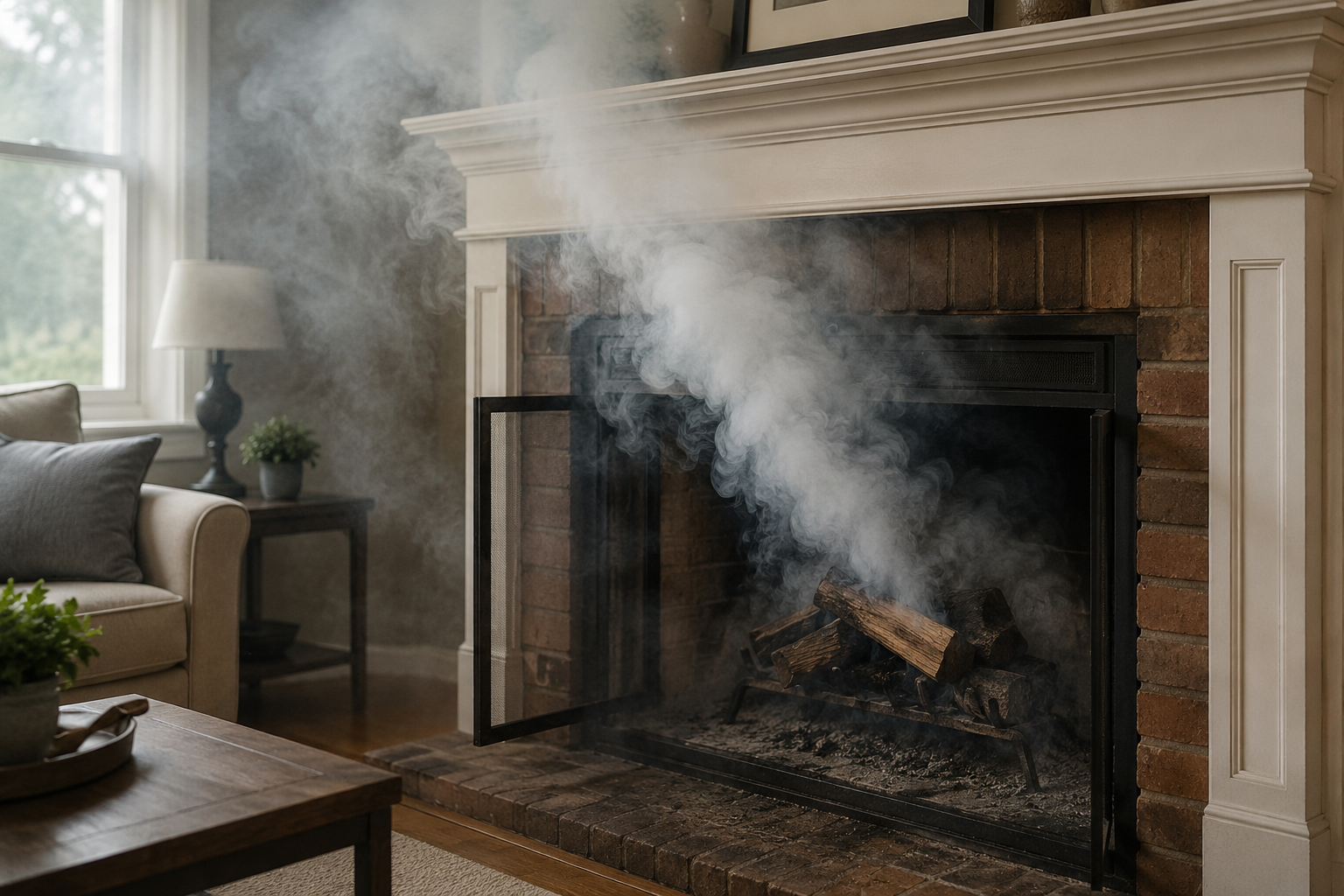
A fireplace can make a home feel warm and comfortable, but smoke coming back into the room can quickly turn a relaxing evening into a problem. If you notice smoke around the fireplace instead of seeing it move up the chimney, there is likely an issue with airflow, the chimney, the firewood, or the fireplace itself.
A small amount of smoke when starting a fire can happen, especially when the chimney is cold. However, ongoing smoke inside the room should not be ignored. Besides leaving soot and an unpleasant smell, fireplace smoke can add harmful combustion pollutants to indoor air. The U.S. Environmental Protection Agency notes that fireplaces can release pollutants such as carbon monoxide, nitrogen dioxide, and particles, and that poor chimney conditions can allow combustion products to move back into living areas.
If you are looking for a fireplace repair service Mashpee MA, knowing what may be causing the smoke can help you understand when a simple adjustment may be enough and when professional attention is needed.
Why Is My Fireplace Smoking Into the Room?
The main reason a fireplace smokes into a room is poor draft. A fireplace needs a steady flow of air to move smoke from the firebox, through the chimney, and outside the home.
When that airflow is weak or blocked, smoke may move in the opposite direction.
Several things can affect fireplace draft. A closed damper, blocked chimney, cold flue, wet firewood, negative air pressure inside the home, or an incorrectly designed chimney can all contribute to the problem.
The good news is that many smoking problems have a clear cause. The first step is finding that cause rather than simply trying to produce a larger fire.
Is the Fireplace Damper Open?
One of the easiest things to check is the damper.
The damper controls airflow between the fireplace and chimney. It needs to be fully open before lighting a fire. If it is partly closed, smoke may not have enough room to travel upward.
The Chimney Safety Institute of America recommends checking that the damper is fully open before starting a fire.
If you rarely use your fireplace, it is easy to forget about the damper. A stuck damper can also cause problems if soot, rust, or other buildup prevents it from opening properly.
If the damper will not move or does not open completely, avoid using the fireplace until the issue has been checked.
Could a Blocked Chimney Be the Problem?
Yes. A blocked chimney is another common reason smoke enters the room.
Leaves, branches, bird nests, animal debris, and creosote can restrict the flue. In older chimneys, pieces of damaged liner or masonry can also fall into the passage and interfere with airflow.
When the smoke cannot move freely toward the outside, it may return through the fireplace opening.
The CSIA explains that chimney blockages can develop from debris, animal nests, and creosote buildup. A blockage that gets worse over time can eventually cause constant smoking.
This is one situation where a professional inspection is a much better option than trying to guess what is happening inside the chimney.
Is Wet Firewood Creating Too Much Smoke?
The type of wood you burn can have a major effect on how much smoke your fireplace produces.
Fresh or damp wood contains more moisture. A large amount of the heat from the fire is then used to remove that moisture instead of producing a clean, hot burn.
The EPA recommends burning dry, seasoned wood with a moisture reading of 20 percent or less. Wet wood can create excessive smoke and increase deposits inside the chimney.
Seasoned wood generally burns hotter and produces less smoke than wet wood. If your fireplace starts smoking after you change the type of firewood you use, the wood may be part of the problem.
Can a Cold Chimney Cause Smoke Problems?
A cold chimney can sometimes struggle to establish a strong upward draft when a fire is first started.
This is more noticeable during cold weather, especially when the chimney is located along an exterior wall. Cold air inside the flue can move downward before the fire has warmed the chimney enough to establish upward airflow.
Once the chimney becomes warmer, the draft may improve.
If the fireplace repeatedly fills the room with smoke every time you start a fire, however, there may be another issue that needs attention.
Is Your Home Too Airtight?
Modern homes can have much less natural air leakage than older homes. While that can help with energy efficiency, it can also affect fireplace draft.
A fireplace needs air to support combustion. Exhaust fans, kitchen ventilation, bathroom fans, clothes dryers, and other equipment can remove air from the home.
If there is not enough replacement air, the house can develop negative pressure. This may pull air down the chimney instead of allowing smoke to rise.
The CSIA explains that airtight homes can experience negative pressure problems that cause chimney air to move downward.
If your fireplace smokes more when another exhaust fan is running, this could be an important clue.
Could Chimney Size or Design Affect Draft?
Yes.
A chimney needs to be properly matched to the fireplace it serves. Problems with height, flue size, chimney location, or design can affect how effectively smoke leaves the house.
A chimney that is too short may not create enough draft. A flue that is too large or too small for the fireplace can also affect performance.
These problems are not always obvious from inside the room. A professional can inspect the fireplace and chimney system to determine whether the design is contributing to the smoke problem.
If the fireplace has always smoked, even when the damper is open and dry wood is used, the chimney design deserves a closer look.
Could Creosote Buildup Cause Fireplace Smoke?
Creosote is a residue created when wood smoke cools and condenses inside the chimney. It can appear as a flaky, crusty, sticky, or hardened deposit.
As creosote builds up, it can restrict the flue and make it harder for smoke to escape. It is also combustible, so significant buildup creates a chimney fire concern.
The EPA explains that restricted airflow, unseasoned wood, and cooler chimney temperatures can encourage creosote formation.
Regular chimney inspection and cleaning can help identify buildup before it creates a larger problem. CSIA recommends having masonry fireplaces swept when soot buildup reaches about one eighth of an inch, or sooner if glazed creosote is present.
What Should You Do When Your Fireplace Starts Smoking?
If smoke begins entering the room, do not keep adding wood in an attempt to make the fire hotter.
First, make sure the damper is open if it can be checked safely. If smoke continues entering the room, stop using the fireplace and allow the situation to be assessed.
You should also pay attention to whether there are signs of a chimney blockage, unusual smells, soot around the fireplace, or changes in how the chimney normally operates.
If smoke continues after using dry wood and making sure the damper is fully open, the EPA recommends having the fireplace or chimney checked by a qualified professional.
When Should You Call for Fireplace Repair?
Some fireplace problems are simple, but others require professional attention.
You should consider calling a professional if the fireplace continues to smoke, the damper is damaged, the chimney has visible cracks, there is heavy soot buildup, water is entering the chimney, or you suspect a blockage.
A fireplace repair service can inspect the fireplace, chimney, damper, masonry, and related components to determine what needs to be repaired.
Trying to fix a chimney or fireplace without understanding the cause can create additional safety problems. A proper inspection helps identify the source instead of treating only the visible symptom.
Can Fireplace Installation Affect Future Smoke Problems?
Yes. Proper installation has a direct effect on fireplace performance.
If a fireplace or chimney is incorrectly sized, poorly vented, or installed without considering the home’s airflow, smoking problems may appear from the beginning.
If you are considering fireplace installation Mashpee MA, make sure the project includes proper planning for chimney draft, ventilation, clearances, and the type of fireplace being installed.
The CSIA notes that when a new hearth appliance is installed, the chimney and venting system must be evaluated to make sure it can safely and properly vent the appliance.
Why Regular Fireplace Maintenance Matters
A fireplace needs more than occasional cleaning.
Regular inspection can identify buildup, damaged components, chimney deterioration, and airflow problems before they become serious.
For homeowners who rely on a fireplace during the colder months, checking the system before heavy seasonal use is a smart habit.
The CSIA recommends annual inspection of solid fuel venting systems and professional cleaning or repairs when needed.
Keeping the chimney clear also helps reduce the chance of creosote related problems and supports better fireplace performance.
Conclusion
Why is my fireplace smoking up the room? The cause may be something as simple as a closed damper or wet firewood, but it can also point to a blocked chimney, poor draft, creosote buildup, negative air pressure, or a damaged fireplace system. Because smoke inside the home can create indoor air quality and safety concerns, persistent smoking should not be ignored. A professional fireplace repair service Mashpee MA can inspect the system, find the source of the problem, and recommend the right repair.
If you need help with fireplace repairs or related masonry work, Diamond Touch Masonry provides expert masonry services for homeowners who want dependable workmanship and properly maintained fireplace structures. Getting the problem checked early can help protect your home, improve fireplace performance, and make future use more comfortable.
Frequently Asked Questions
Why does my fireplace smoke when I first light it?
A cold chimney, poor draft, wet firewood, or limited airflow can cause smoke when a fire is first started. If the problem continues after the chimney warms, the system should be inspected.
Can a closed damper make a fireplace smoke?
Yes. A damper that is closed or only partly open can restrict the path that smoke needs to travel outside. Always make sure the damper is fully open before using a fireplace.
Can wet wood make my fireplace smoke?
Yes. Wet wood produces more smoke because heat is used to remove moisture from the wood. The EPA recommends burning properly seasoned wood with a moisture level of 20 percent or less.
How often should a chimney be inspected?
The CSIA recommends annual inspection of solid fuel venting systems, with cleaning and repairs performed when needed.
Is fireplace smoke inside the home dangerous?
It can be. Fireplace and wood smoke can contain carbon monoxide and other pollutants. If smoke continues entering the room, stop using the fireplace and have the system checked.
Can a new fireplace solve an old smoking problem?
It may, but the chimney and venting system also need to be suitable for the new fireplace. Simply replacing the fireplace without addressing the underlying draft or chimney issue may not solve the problem.