
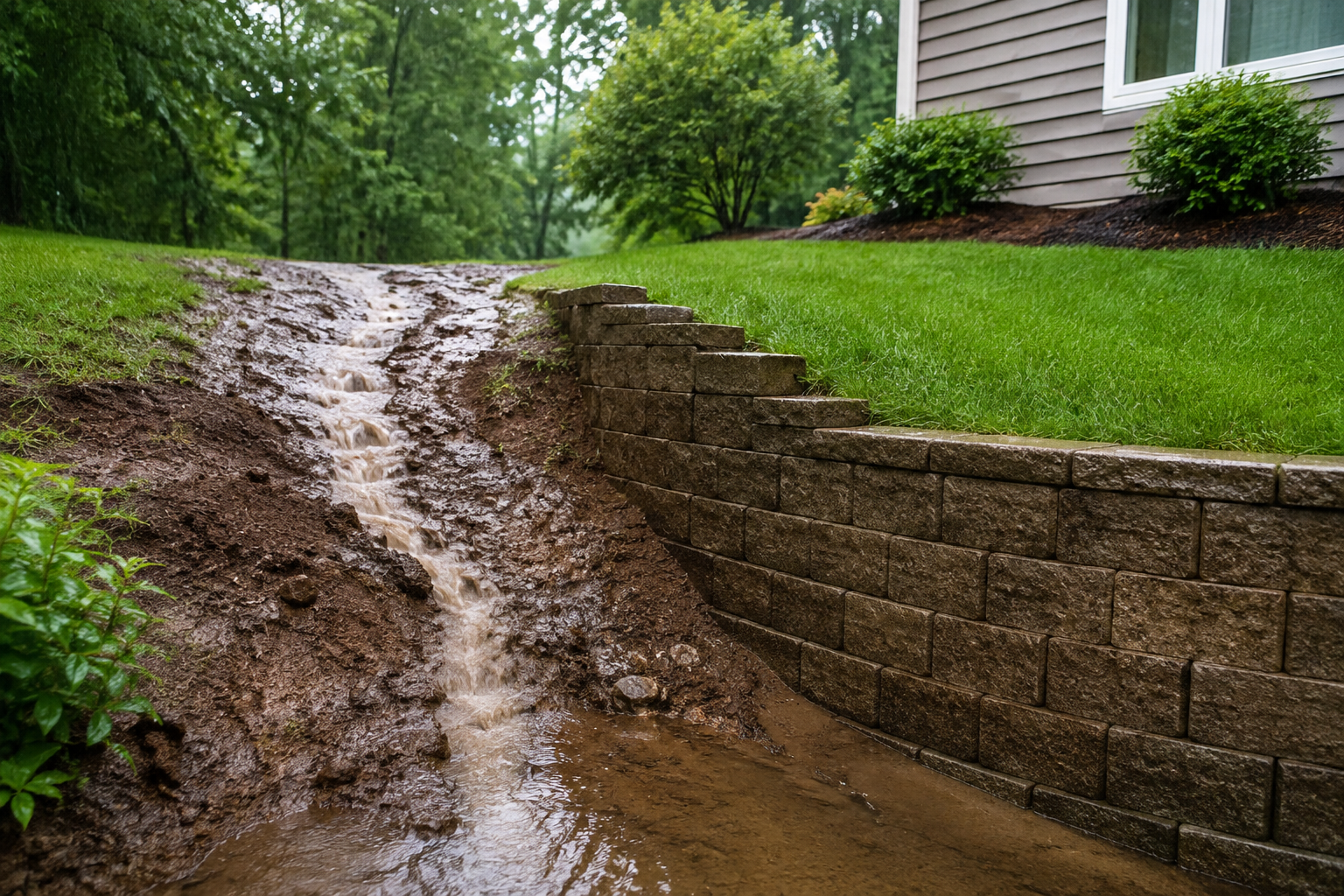
Heavy rain can change the way water moves across your property. If you notice soil washing away from your yard, exposed roots, muddy patches, or small channels forming in the ground, your property may have an erosion problem.
Soil erosion is more than a cosmetic issue. Over time, repeated rain can remove topsoil, weaken slopes, expose plant roots, damage landscaping, and create drainage problems near your home. Properties with slopes are often more likely to experience these issues because water gains speed as it moves downhill.
A retaining wall can be one way to manage this problem. A properly planned wall can hold soil in place, reduce the movement of dirt, and help control water around sloped areas. However, a wall is not always the only answer. The drainage pattern, soil type, slope, and amount of water moving across the property all need to be considered.
If you are researching retaining wall installation in Truro MA, understanding why your yard is losing soil can help you decide whether a retaining wall is the right solution.
Why Does Heavy Rain Wash Away Soil?
Rain itself does not always cause serious erosion. The bigger problem is often the amount and speed of water moving across the ground.
When rain falls faster than the soil can absorb it, water begins to run across the surface. As the flow increases, it can carry small soil particles with it.
This process may happen slowly at first. You might only notice a thin layer of dirt near a walkway or driveway. After several heavy storms, however, the affected area can become much larger.
Properties with bare soil, steep slopes, poor drainage, or loose ground can be especially vulnerable.
What Are the Signs of Soil Erosion?
Your yard can show several signs when rain is removing soil.
Look for:
- Small channels or grooves in the ground
- Exposed tree and plant roots
- Mud collecting near hard surfaces
- Soil building up at the bottom of a slope
- Areas where grass keeps disappearing
- Uneven ground after storms
One sign may not indicate a major problem. But if the same area continues losing soil after each heavy rain, the problem should be investigated.
Ignoring repeated erosion can make the repair more difficult later.
How Does a Retaining Wall Help?
A retaining wall is designed to hold soil at a controlled elevation. It can be useful when a slope needs support or when soil is repeatedly moving downhill.
Instead of allowing the entire slope to remain exposed, a wall can create a more stable section of ground.
A properly designed wall may help:
- Hold soil in place
- Break up a steep slope
- Reduce downhill soil movement
- Create usable planting areas
- Protect landscaping
- Improve the appearance of the property
The wall itself is only one part of the solution. Drainage behind the wall is also extremely important.
Why Is Drainage Important Behind a Retaining Wall?
Water pressure can become a serious problem when water collects behind a retaining wall.
Without proper drainage, saturated soil can place additional pressure against the wall. During repeated storms, this pressure can contribute to movement, cracking, leaning, or other structural problems.
A well planned retaining wall may include drainage stone, perforated drainage pipe, outlets, or other methods for moving water away from the soil behind the wall.
This is one reason a retaining wall installation service should involve more than simply stacking blocks or stones.
The wall needs to work with the property’s existing drainage pattern.
Can a Retaining Wall Stop All Soil Erosion?
Not always.
A retaining wall can address soil movement in a specific area, but it may not solve every source of erosion.
For example, water coming from an upper part of the property may continue flowing around the wall. If that water is not managed, erosion can simply move to another location.
This is why the entire drainage pattern should be considered before construction.
Sometimes a combination of solutions works better than one feature alone.
How Does the Slope Affect Soil Loss?
The steeper the slope, the faster water can move downhill.
A gently sloped yard may lose small amounts of soil during heavy storms. A steep yard can experience much stronger runoff.
A retaining wall can help divide a steep slope into smaller sections. This can reduce the amount of exposed soil and make the property easier to landscape.
Terraced areas can also create useful planting spaces while improving the overall appearance of the yard.
However, the wall design needs to match the slope and the amount of soil it will retain.
What Materials Can Be Used for Retaining Walls?
Retaining walls can be built using several different materials.
Concrete blocks are popular because they provide a clean and structured appearance. Natural stone can provide a more traditional look and work well with many landscapes.
Brick, poured concrete, and other masonry materials may also be appropriate depending on the property and project.
The best choice depends on the wall height, soil conditions, drainage needs, appearance, and budget.
For homeowners considering block wall installation in Truro MA, it is important to look beyond the surface appearance. The foundation, drainage, wall design, and surrounding grade all affect long term performance.
Can Plants Help Control Soil Erosion?
Yes.
Plants can help hold soil together because their roots create a network beneath the ground. Grass, shrubs, ground cover, and other suitable plants can reduce the amount of exposed soil.
Planting alone may work for minor erosion, but it may not be enough for a steep or heavily eroded slope.
A useful approach can be to combine vegetation with grading, drainage, stone, or a retaining wall.
This creates a more complete erosion control plan instead of relying on one solution.
What Happens If Erosion Is Ignored?
Small erosion problems can become larger over time.
Continued soil loss may expose roots, reduce the amount of usable topsoil, and change the shape of the yard. Water may also begin flowing toward areas where it was not previously a concern.
In some cases, erosion can affect patios, walkways, driveways, fences, or other structures near the affected area.
The sooner the cause is identified, the more options you may have for addressing it.
Should You Install a Retaining Wall or Improve Drainage First?
The answer depends on why the soil is moving.
If water is simply running down a slope, improving the drainage path may reduce erosion without requiring a large wall.
If the slope itself is unstable or soil is repeatedly sliding downhill, a retaining wall may be more appropriate.
In many cases, both solutions may be needed.
A property assessment can help determine where the water is coming from, where it is going, and why soil is being carried away.
How Is a Retaining Wall Installed?
A professional installation normally begins with planning rather than construction.
The contractor evaluates the slope, soil, drainage, wall location, and surrounding structures. The ground is then prepared for the wall.
Depending on the design, the process may include excavation, base preparation, drainage installation, placement of the wall material, backfilling, and final grading.
Each part matters.
A wall built on an unstable base may shift over time. Poor drainage can create pressure behind the wall. Incorrect grading can send water toward the wall instead of away from it.
That is why proper preparation is just as important as the visible finished wall.
How Can You Prepare Your Yard Before Installation?
Before starting a retaining wall project, look at what happens during and after heavy rain.
Notice where water comes from and where it collects.
It can also help to photograph the affected areas after a storm. These pictures can show how the erosion changes over time and give a contractor useful information about the problem.
Avoid simply adding more soil to an eroded area without addressing the water flow. Fresh soil may wash away again during the next major storm.
Can a Retaining Wall Improve the Look of Your Yard?
Yes.
A retaining wall can provide a practical function while also giving a property a more organized appearance.
A sloped yard can be divided into defined areas for gardens, shrubs, walkways, or other landscaping. Stone and masonry walls can also complement patios, driveways, and outdoor living spaces.
The key is to choose a design that fits the property instead of treating the wall as a separate feature.
What Should You Ask a Contractor?
Before hiring someone for the project, ask how they plan to handle drainage and soil movement.
Useful questions include:
- What is causing the erosion?
- Where will rainwater flow after installation?
- What type of foundation will the wall need?
- How will water drain from behind the wall?
- Which material is suitable for the property?
- How will the finished area be graded?
- What maintenance will the wall require?
Clear answers can help you understand whether the proposed solution addresses the actual cause of the problem.
When Is Professional Help Needed?
Minor soil loss can sometimes be addressed through landscaping and improved water management.
However, professional advice is a good idea when the yard has a steep slope, major erosion, exposed foundations, large amounts of moving soil, or signs that an existing wall is shifting.
A professional can look at the complete site rather than focusing only on the visible erosion.
For property owners considering retaining wall installation in Truro MA, this type of evaluation can help prevent spending money on a solution that does not
address the source of the problem.
Conclusion
Is your yard losing soil after every heavy rain, and could a retaining wall help? If repeated storms are washing soil down your property, the problem should not be treated as a simple landscaping issue. Water flow, slope, soil conditions, and drainage all play a role in deciding the right solution. A properly planned retaining wall can help stabilize sloped areas, protect soil, and create a more useful outdoor space when it is designed with proper drainage and site conditions in mind. If you are considering retaining wall installation in Truro MA, getting professional guidance before construction can help you choose a solution that fits your property.
Diamond Touch Masonry provides expert masonry services for property owners looking for quality masonry and retaining wall solutions. Their team can help create durable outdoor structures that support both the practical needs and appearance of your property.
Frequently Asked Questions
Can heavy rain really cause major soil erosion?
Yes. Heavy rain can create fast surface runoff that carries soil downhill. Repeated storms can gradually remove large amounts of soil, especially from sloped or exposed areas.
Will a retaining wall stop soil from washing away?
A properly designed retaining wall can help hold soil in place, but it may not solve every drainage problem. Water management around the wall is also important.
Does a retaining wall need drainage?
Yes. Proper drainage helps prevent water from building up behind the wall and placing excessive pressure on the structure.
Are plants useful for erosion control?
Yes. Plant roots can help hold soil together. Vegetation can work well alongside grading, drainage improvements, or a retaining wall.
Is a block retaining wall a good option?
Block walls can be a practical choice for many properties. The right material depends on the wall design, soil, slope, drainage, appearance, and project requirements.
Can I fix a small erosion problem myself?
Minor erosion may sometimes be managed with plants, mulch, grading, or other landscaping methods. If soil continues to move after heavy rain, it is better to identify the cause before making larger repairs.
How long can a retaining wall last?
The lifespan depends on the material, design, foundation, drainage, soil conditions, installation quality, and maintenance. Proper construction can help a wall remain functional for many years.