
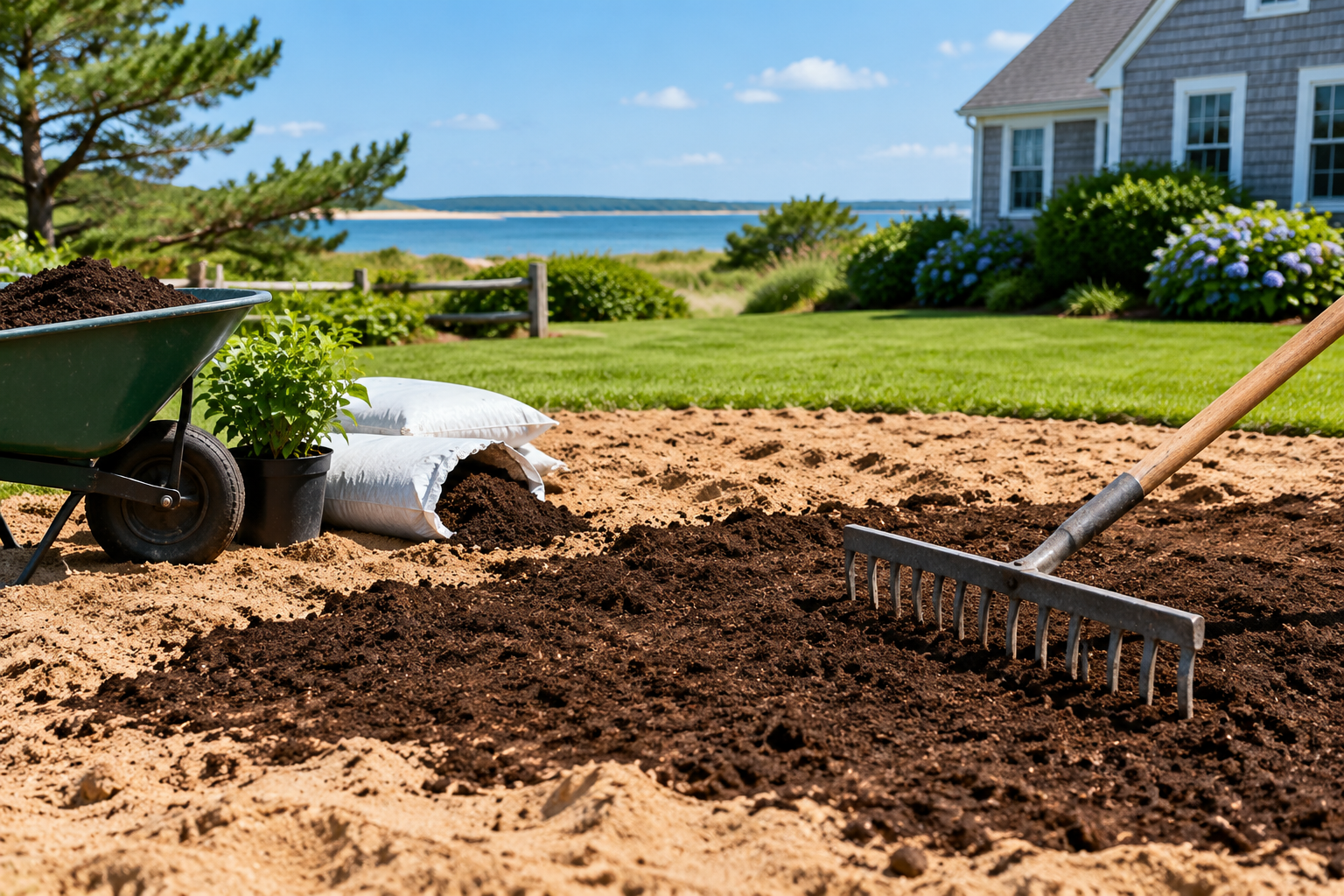
Starting a new lawn on Cape Cod can be a little different from planting grass in other parts of Massachusetts. Many properties around Cape Cod have sandy soil that drains water quickly. While good drainage sounds helpful, sandy soil can also make it harder for new grass to get enough moisture and nutrients.
If the soil is not prepared before planting, grass may grow thin, turn brown, or develop bare spots. The good news is that sandy soil can be improved with the right preparation. Adding organic matter, correcting the soil level, choosing suitable grass, and following a proper watering plan can give your new lawn a much better start.
For homeowners considering lawn installation services Cotuit MA, preparing the soil should be one of the first parts of the project. A healthy lawn begins below the grass, so taking time to improve the soil can make a noticeable difference later.
Why Is Cape Cod Soil Often Sandy?
Cape Cod has many areas with naturally sandy soil. This type of soil contains large particles that leave plenty of space between them. Water can move through those spaces quickly.
That is helpful when heavy rain falls because water does not stay on the surface for long. However, there is a downside for grass.
Water may move below the root zone before the grass can use it. Nutrients can also wash through the soil more easily than they would in heavier soil.
New grass needs steady access to water and nutrients while its roots are becoming established. This is why soil preparation matters so much on sandy properties.
What Problems Can Sandy Soil Cause?
Sandy soil is not automatically bad for a lawn. In fact, grass can grow well in it when the soil has enough organic material and is managed correctly.
The main problem is that untreated sandy soil often holds less water and nutrients.
You may notice:
- Grass drying out quickly after watering
- Thin or weak areas
- Bare patches
- Faster nutrient loss
- More frequent watering needs
- Poor growth during hot weather
These issues can become more noticeable during summer when Cape Cod experiences periods of warm and dry weather.
Before installing a new lawn, it makes sense to address the soil instead of expecting fertilizer and water to solve everything later.
Start With a Soil Test
A soil test is a smart first step before preparing the ground. A test can show the soil’s pH and nutrient levels. It can also help identify whether the soil needs amendments before grass is planted.
Grass generally performs best when soil conditions are suitable for root growth. If the pH is too high or too low, nutrients may not be available to the grass in the right amounts. Do not add lime or other soil products simply because they are commonly used for lawns. A soil test gives you a better reason for adding them. Once you know what the soil needs, you can prepare it with fewer unnecessary products.
Add Organic Matter to Sandy Soil
Organic matter can make a big difference in sandy soil. Compost is one common option. It adds material that can help sandy soil hold more moisture while also improving the soil’s overall condition.
Spread a suitable amount of compost across the lawn area and work it into the upper layer of soil. The goal is to mix the organic material into the soil rather than leaving a thick layer on top.
Do not use fresh manure or materials that have not fully broken down. Poorly finished material can create problems for new grass and may introduce unwanted weed seeds.
For a new lawn, good soil preparation is usually worth the effort because it gives the grass a better place to develop its roots.
Check the Soil Depth
Before planting grass, look at how much usable soil is available.
A very thin layer of soil over sand, gravel, or construction material can limit root development. Grass may look healthy for a short period but struggle during hot or dry weather.
Adding good quality topsoil may be helpful when the existing soil is too shallow or poor.
The new soil should be spread evenly across the area. Avoid creating large differences in soil depth because uneven ground can lead to inconsistent grass growth and drainage problems.
If the lawn area connects to driveways, patios, walkways, or other structures, the finished grade should also be planned carefully.
Fix Low and High Areas Before Planting
A lawn should have a reasonably even surface before grass seed or sod is installed. Walk across the area and look for low spots, high areas, holes, and uneven sections. Low spots may collect water after heavy rain. High spots can dry out faster and may make mowing difficult. Use suitable soil to correct the grade before planting. This is much easier than trying to fix major grading problems after the lawn has already been installed.
Remove Rocks and Construction Debris
Cape Cod properties can contain rocks, roots, old landscaping material, and construction debris. These items should be removed before the final soil preparation.
Large rocks can interfere with grass roots and make mowing difficult. Construction debris can also create hard areas where grass struggles to grow. After removing debris, rake the area so the soil surface is fairly smooth. A clean planting area gives seed or sod better contact with the soil.
Choose Grass That Fits Cape Cod Conditions
Not every grass type performs the same way. Cool season grasses are commonly used in Massachusetts because they can handle the region’s seasonal conditions.
The right grass choice depends on sunlight, foot traffic, soil, watering habits, and how much maintenance you want to do. A lawn that receives full sun has different needs from one growing under trees.
Before choosing seed or sod, consider the actual conditions on your property instead of selecting grass based only on appearance.
Prepare the Soil Before Seeding
Once the soil has been amended and graded, prepare the surface for planting. The soil should be loose enough for seed to make contact with the ground, but it should not be so loose that it becomes difficult to walk across. Rake the top layer lightly before spreading seed.
Seed should be distributed evenly. Applying too much seed does not always create a better lawn. Crowded grass plants can compete for water and nutrients as they grow. After spreading seed, lightly rake the area so the seed has good contact with the soil.
Consider Sod for Faster Results
Sod is another option for homeowners who want an established lawn sooner. Sod still needs good soil preparation. It cannot fix poor grading or badly prepared ground. Before placing sod, make sure the soil is properly graded and has suitable moisture.
The pieces should fit closely together without large gaps. Water the new sod according to the needs of the grass and current weather conditions. Even though sod provides a finished appearance much faster than seed, the roots still need time to grow into the soil below.
Create a Smart Watering Plan
Sandy soil drains quickly, so watering needs to be managed carefully. New grass needs enough moisture to establish roots, but constant overwatering is not a good solution.
Instead of giving the lawn a large amount of water all at once, follow a schedule based on soil conditions, weather, and the type of grass.
Check the soil before watering. If the surface is dry but the deeper soil still has moisture, more water may not be needed yet.
During hot Cape Cod weather, new lawns may need closer attention because sandy soil can dry faster than heavier soil.
Do Not Overuse Fertilizer
More fertilizer does not always mean faster grass growth. Sandy soil can allow nutrients to move through the ground quickly, but applying large amounts of fertilizer can damage grass and create other environmental concerns.
Use a soil test and follow the recommended application rate.
Slow and steady lawn growth is often better than trying to force the grass to grow quickly. Once the lawn is established, regular mowing, watering, and seasonal feeding can help maintain healthy growth.
Watch for Weeds Early
Weeds often appear in newly prepared soil.
Some may come from existing soil, while others can arrive through wind, birds, or nearby areas.
Early weed control is easier than waiting until weeds spread across the lawn.
Hand removal can work for small areas. For larger problems, property owners may want professional help with garden and lawn weed removal Cotuit MA.
The goal is to control weeds without damaging young grass.
Avoid applying products without checking whether they are safe for newly planted lawns.
How Landscaping Can Affect a New Lawn
Trees, shrubs, walkways, patios, and other landscaping features can affect how your lawn receives sunlight and water. Large trees may create shaded areas where grass has trouble growing. Roof runoff may also concentrate water in certain parts of the yard. Before installing a lawn, look at the entire property.
Ask where water comes from, where it goes, and which areas receive direct sunlight. A lawn plan that ignores these factors can lead to uneven growth.
Should You Prepare the Soil Yourself?
Small lawn areas can often be prepared by homeowners who have the time and equipment. Larger properties can be more demanding.
Moving soil, correcting grades, removing debris, spreading amendments, and preparing the planting area can take considerable effort.
Professional lawn installation services can handle these steps as part of a planned lawn project. This can be especially useful when the existing soil has drainage problems, poor grading, or large areas of compacted ground.
The right approach depends on the size of your property and the condition of the existing soil.
Common Mistakes to Avoid
A few simple mistakes can make new lawn installation harder than it needs to be. Avoid planting grass before fixing major grading problems. Do not skip soil testing when the lawn has a history of poor growth. Avoid adding large amounts of fertilizer without knowing what the soil needs.
It is also a mistake to assume that sandy soil needs constant watering. The better approach is to improve the soil first and then manage water based on actual conditions.
What Does a Good Lawn Installation Process Look Like?
A well planned lawn project usually starts with an inspection of the property. The soil is checked, the lawn area is measured, and drainage and sunlight are considered. Poor soil may be amended, while uneven areas can be graded before planting. The planting method is then selected based on the property and homeowner’s goals.
Once the grass is installed, watering and early maintenance become the next priority. This process helps avoid the common situation where a new lawn looks good at first but begins to thin out after a few weeks.
Conclusion
How can you prepare sandy Cape Cod soil for a new lawn? Start by testing the soil, improving its organic content, correcting the grade, removing rocks and debris, and choosing grass that fits the property’s sunlight and moisture conditions. Sandy soil can support a healthy lawn, but it needs the right preparation and care. Taking time to prepare the ground before planting can reduce many common lawn problems later.
For homeowners looking for lawn installation services Cotuit MA, Diamond Touch Masonry provides expert masonry services and can help with property improvement projects that complement outdoor spaces. A properly prepared lawn can add a clean, useful area to your property and make the surrounding landscape look much better.
Frequently Asked Questions
Is sandy soil good for growing grass?
Yes. Sandy soil can support a healthy lawn when it has enough organic matter, suitable nutrients, and proper moisture. Its fast drainage can be helpful, but it also means the soil may dry out faster.
Should I add compost to sandy soil?
Compost can help improve sandy soil by adding organic material and helping the soil hold moisture. A soil test and professional advice can help determine how much should be added.
How often should I water a new lawn?
Watering needs depend on the grass type, weather, soil condition, and whether you use seed or sod. New grass needs steady moisture during establishment, but the soil should not remain soaked.
Can I install a lawn without testing the soil?
You can, but a soil test can provide useful information about pH and nutrients. Testing can help you avoid adding products that your soil does not need.
Why does my new grass keep drying out?
Sandy soil may drain water quickly, especially during warm weather. Poor watering habits, shallow roots, too much sun, or poor soil preparation can also contribute to dry grass.
Is sod better than seed for sandy Cape Cod soil?
Both can work. Sod provides a faster finished appearance, while seed can offer more flexibility in grass selection and may cost less for some projects. Soil preparation is important with either option.
When should I remove weeds from a new lawn?
Small weeds are easier to deal with before they spread. However, care is needed around newly planted grass because some weed control products can harm young turf.