
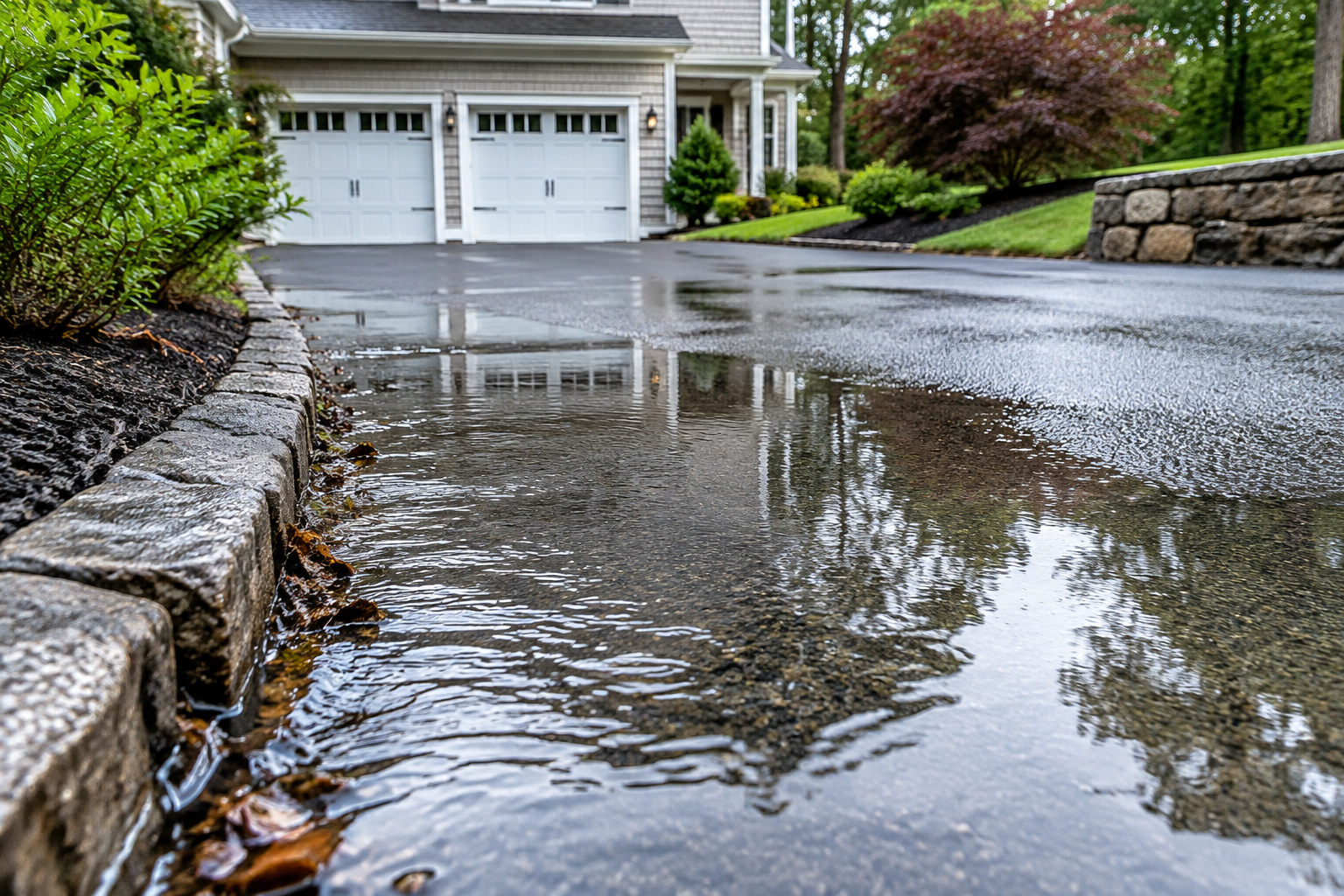
Have you noticed water sitting on your driveway after a storm, flowing toward your garage, or washing soil away near the edges? Drainage problems can be frustrating, especially when the same wet spots return after every heavy rain.
For homeowners and property owners in Mashpee, driveway drainage deserves attention because the problem may involve more than the surface itself. The slope, soil, driveway base, nearby landscaping, gutters, downspouts, and surrounding ground can all affect where rainwater goes.
If the driveway was built without enough attention to water flow, repairs may only provide a short term fix. A contractor may need to look at the entire area before deciding whether grading, drainage work, resurfacing, or a complete replacement makes sense.
This is one reason property owners should choose driveway installation services Mashpee MA from a contractor who understands both driveway construction and water movement around the property.
Why Driveway Drainage Matters
Rainwater needs a clear path away from the driveway. When water cannot move properly, it may collect in low areas or run across places where it can cause damage.
Massachusetts guidance explains that hard surfaces such as asphalt and concrete do not allow water to soak into the ground in the same way as soil and planted areas. These surfaces can increase the amount and speed of stormwater runoff.
That can create several problems around a driveway.
Water may stay on the pavement for hours after a storm. It may flow toward a garage, basement entrance, lawn, walkway, or neighboring property. Repeated runoff can also wash away soil and expose the driveway edge.
Over time, poor drainage can contribute to cracks, surface damage, erosion, and problems with the driveway base.
The Driveway May Have the Wrong Slope
One of the first things to check is the slope.
A driveway should guide water away from areas where it can cause trouble. If the surface is too flat, rainwater may have nowhere to go. If the slope sends water toward the house, the situation can become worse during heavy storms.
A driveway can also develop drainage problems when its original grade changes. Settling, soil movement, previous repairs, landscaping work, or nearby construction can change how water travels.
You may notice a low spot that did not exist several years ago. That low area can collect water each time it rains.
In some cases, correcting the grade may help. In others, the driveway may need more extensive work.
Poor Soil Can Cause Water to Stay
The ground below and around a driveway affects drainage.
Some soils absorb water more slowly than others. Compacted soil can also reduce the amount of water that can move into the ground.
This becomes more noticeable when a driveway has been installed over poorly prepared ground.
If the base was not prepared correctly, the driveway may settle in certain areas. Water can then collect in those low sections.
Massachusetts guidance recommends managing stormwater in ways that slow runoff and allow water to infiltrate where site conditions permit. Options can include vegetated areas, swales, gravel, and permeable surfaces.
That does not mean every driveway should be replaced with gravel or permeable pavement. The right approach depends on the property, soil, slope, existing drainage, and intended use.
Gutters May Be Adding to the Problem
Sometimes the driveway is not the main source of the drainage issue.
Look at where your gutters and downspouts send water.
A downspout that releases a large amount of water directly beside the driveway can create repeated runoff. If the water then moves across the pavement, it can collect in the lowest part of the property.
Massachusetts recommends avoiding direct connections that send sump pump or gutter water onto hard surfaces such as driveways and instead directing water toward suitable vegetated areas where infiltration can occur.
A simple change to the downspout outlet may help in some cases. However, if the driveway itself has poor grading, the problem may continue.
Cracks Can Change Water Flow
Small cracks may seem like a cosmetic issue, but repeated water exposure can make driveway problems worse.
Water can enter cracks and reach lower layers of the pavement. During cold weather, trapped moisture can also contribute to expansion and surface damage.
A few small cracks do not automatically mean that a driveway needs replacement. But widespread cracking, sinking, standing water, and edge erosion can point to a larger construction or drainage issue.
If water keeps returning to the same place, sealing the crack alone may not solve the reason the water is there.
Driveway Edges Need Proper Support
Pay attention to the edges of your driveway.
If soil beside the pavement is lower than the driveway surface, rainwater may run along the edge and wash the soil away. This can leave unsupported sections of pavement.
You may notice:
- Exposed driveway edges
- Washed out soil
- Small channels beside the pavement
- Grass or mulch moving after storms
- Cracks near the driveway edge
- Sections that appear lower than before
Edge drainage can become especially noticeable when water from a roof or nearby slope reaches the driveway.
A contractor can inspect where that water comes from and determine whether the problem needs grading, an edge treatment, a drainage channel, or another approach.
Heavy Rain Can Reveal Hidden Problems
A driveway may look fine during normal weather and still have a drainage problem. A short, heavy storm can reveal issues that light rain does not.
Watch the driveway during and after a strong rainfall. Look for the direction water takes, how quickly it leaves the surface, and where it collects.
You can also check whether water moves toward:
- Your garage
- Foundation walls
- Walkways
- Landscaping
- Neighboring property
- A public road
- A low part of the yard
These observations can give a contractor useful information before work begins.
Why the Driveway Base Matters
A driveway is more than its visible surface. Under asphalt or concrete, there is a prepared base that supports the finished driveway. If that base is weak, poorly compacted, or affected by water, the surface may settle or crack.
Mashpee regulations for certain parking and driveway construction specify a base of at least eight inches of good binding gravel or another suitable road base material, properly shaped and compacted. The regulations also address drainage and require surfaces to be built so ponding does not occur in applicable projects.
The exact requirements for a residential project can depend on the property and type of work, so homeowners should confirm applicable requirements before construction.
The larger point is simple: a driveway needs a properly prepared foundation, not just a new surface placed over an existing problem.
Could Landscaping Be Causing Runoff?
Changes around the driveway can affect drainage. For example, a new garden bed may redirect water toward the pavement. A raised planting area may stop water from moving where it used to go. Soil added during landscaping can also change the grade.
Even a small change can affect a low section of a driveway.
If your drainage problem started after landscaping work, compare the current ground levels with how the property looked before the work.
This can help identify whether the water is coming from the driveway or from a change in the surrounding property.
When a New Driveway May Be Better
A repair can make sense when the problem is small and the driveway structure is still in good shape.
Replacement may make more sense when several problems appear together.
For example:
- Large sections have settled
- Water remains after normal rainfall
- Cracks appear across several areas
- The driveway edge is washing away
- The base has lost support
- Previous repairs keep failing
- Water moves toward the house
- The existing grade cannot be corrected easily
When a driveway needs major reconstruction, it is worth addressing drainage during the project rather than installing a new surface and leaving the same water problem underneath it.
This is where driveway installation services Mashpee MA can involve much more than choosing asphalt, concrete, or another surface. Proper grading, base preparation, water flow, and surrounding ground conditions all need to be considered.
What Can Help With Driveway Drainage?
There is no single drainage fix for every property.
The right solution depends on the source of the water.
Possible approaches include:
Regrading
If the surface has the wrong slope, adjusting the grade may direct water away from problem areas.
Drainage Channels
A channel drain can collect water at a specific location and move it toward an appropriate discharge area.
Swales
A shallow, planted drainage area can slow and redirect surface water where the property allows it.
Gravel Areas
Gravel can help slow water and allow more infiltration than a fully paved surface in suitable locations.
Permeable Materials
Some permeable pavement systems allow water to pass through the surface and into a prepared base. Their suitability depends on soil and site conditions.
Massachusetts stormwater guidance lists permeable pavement and infiltration practices among possible ways to manage runoff when site conditions allow.
Downspout Changes
Moving water away from the driveway can reduce the amount of runoff reaching the pavement.
The best option should be based on the actual source of the water rather than choosing a drainage product first.
Mashpee Rules Can Matter
Driveway work can involve local requirements, especially when the work affects a public way.
The Town of Mashpee states that anyone intending to construct a driveway or break a street, curb, sidewalk, or other public way surface must obtain the required permit from the Department of Public Works. The town also states that driveway entrances must be constructed to prevent surface water and material from running onto a public way.
That matters when a driveway connects to a town road.
Before starting major work, homeowners should check with the appropriate Mashpee department about permits and current requirements for their property.
How to Check Your Driveway After Rain
You do not need special equipment to make a basic observation.
The next time it rains heavily, walk around the property after it is safe to do so.
1. Look for standing water.
Mark the areas where water remains after most of the driveway has dried.
2. Follow the water.
Watch where runoff starts and where it ends.
3. Check the edges.
Look for washed out soil, small channels, or exposed pavement.
4. Check nearby downspouts.
See whether roof water is being released close to the driveway.
5. Look near the garage.
Water moving toward the garage or foundation deserves attention.
6. Take photos.
Pictures taken during and after rain can help a contractor understand the issue.
These simple observations can make a site inspection more useful.
When to Call a Contractor
You should consider getting professional help when drainage problems keep coming back after basic repairs.
It is also a good idea to get an inspection if water is moving toward your home, the driveway is sinking, the pavement has widespread cracks, or soil is washing away around the edges.
A contractor can examine the driveway, surrounding grade, base, drainage paths, and nearby features.
For projects involving concrete, property owners may also search for concrete installation contractors in Mashpee MA when deciding whether concrete is the right material for a new driveway or another hardscape area.
The material matters, but proper preparation and drainage matter just as much.
How to Prevent Future Drainage Problems
Good drainage starts before the new driveway is installed.
A contractor should consider the existing slope, soil, drainage paths, driveway thickness, base material, nearby structures, and how water will leave the property.
Avoid treating water as an afterthought.
A new driveway may look great on installation day, but the real test comes after months of rain, snow, temperature changes, and normal vehicle use.
Planning for water from the start can reduce the chance of repeating the same problem later.
Conclusion
Why keep repairing the same wet spots when the real problem may be the way water moves across your Mashpee property? Repeated standing water, washed out edges, cracks, and settling can point to grading, soil, base, gutter, or drainage issues that need to be addressed before another surface repair is made.
Choosing driveway installation services Mashpee MA can make sense when an existing driveway has reached the point where repairs no longer solve the drainage problem. A proper project should look at the driveway and the surrounding property together so water has a better path away from the areas that need protection.
Diamond Touch Masonry provides expert masonry services for property owners looking to improve and maintain outdoor areas. Their work can be a good fit for projects where driveway construction, masonry work, and related property improvements need careful planning.
FAQs
Why does water keep collecting on my driveway?
Water may collect because of poor grading, settling, compacted soil, drainage from gutters, a weak base, or changes in the surrounding landscape. A site inspection can help identify the actual cause.
Can driveway cracks cause drainage problems?
They can contribute to water entering the pavement system, but cracks are often a sign of a larger issue such as movement, settling, age, or poor drainage. Sealing cracks may not fix the underlying cause.
Should driveway water flow toward the street?
Not automatically. The driveway should be designed so water is handled properly and does not create problems for the public way or nearby property. Mashpee’s driveway requirements specifically address preventing surface water and material from running onto a public way.
Can gravel help with driveway drainage?
Gravel can allow more water to infiltrate than some solid pavement surfaces and can slow runoff. Massachusetts recommends gravel and other surfaces that allow infiltration as possible stormwater management choices where appropriate.
Should I replace my driveway because of standing water?
Not always. The cause may be correctable through grading, drainage work, downspout changes, or repairs. If the driveway has widespread structural damage, replacement may be worth considering.
Do I need a permit for driveway work in Mashpee?
Certain work involving a driveway or public way requires approval or permits. Mashpee states that construction of a driveway within a town way and work affecting public surfaces require the applicable permit from the Department of Public Works.