
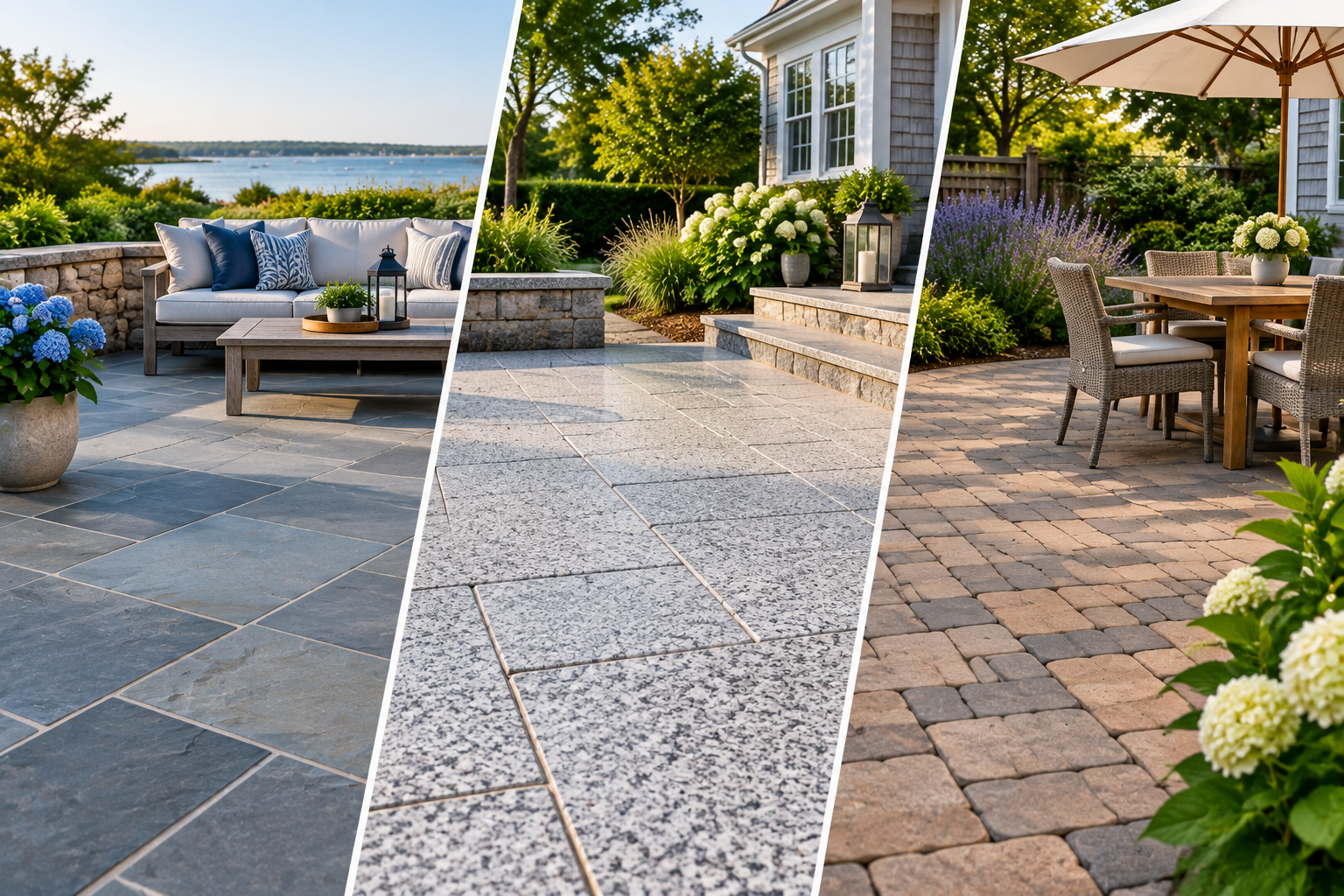
Choosing a patio material sounds simple until you start comparing stone color, maintenance, drainage, winter weather, and installation costs. For a property in North Chatham, the decision also needs to account for coastal conditions and the freeze and thaw cycles common across Massachusetts.
A good patio should fit the way you plan to use the space. A quiet sitting area may call for a different material than a large entertaining space with outdoor furniture, a grill, or a fire pit. The material also needs a properly prepared base because even an expensive stone can shift when the work underneath it is poorly done.
If you are planning patio installation in North Chatham MA, three materials often come up during the planning stage: bluestone, granite, and concrete pavers. Each has its own appearance, maintenance needs, installation method, and price range.
So which one makes sense for your property? The answer depends less on which material looks best in a sample and more on how you expect to use the patio for years to come.
Bluestone Gives a Classic Cape Cod Look
Bluestone is a popular choice for Massachusetts patios because its blue gray and gray tones work well with many coastal home styles. It can create a clean surface without making the patio look too formal.
Bluestone is available in different finishes and patterns. Thermal finished stone can provide a textured surface that works well in outdoor areas where rain or moisture may be present. Natural cleft finishes have a more varied appearance and can give the patio a relaxed stone look.
For homeowners who want a patio that feels connected to the surrounding property, bluestone is often worth considering. It can work especially well with stone walls, wood siding, natural landscaping, and Cape Cod style homes.
Reasons to consider bluestone
- Natural stone appearance
- Several color and finish options
- Works well with coastal home styles
- Can be used for patios, walkways, and steps
- Provides a solid surface for outdoor furniture
The main consideration is that natural stone installation requires careful preparation. Stone thickness, base depth, drainage, grading, and joint treatment all affect the finished patio.
Granite Is Built for Heavy Use
Granite has a reputation for strength, and there is a good reason for that. It is a hard natural stone that works well in areas exposed to regular foot traffic and changing weather.
Granite is often used for steps, borders, edging, curbing, and other masonry details. It can also be used as a patio surface when the design calls for a more substantial stone appearance.
Its natural colors tend to stay within gray, charcoal, brown, and related tones, depending on the stone selected. That makes granite easy to combine with other hardscape materials.
One interesting option is to use granite as an accent rather than covering the entire patio with it. For example, a bluestone patio can include granite edging or steps. This can give the project more visual structure without making every part of the surface the same.
Granite can also be useful for properties where durability is a major concern. Its hardness makes it suitable for areas that receive regular use.
Pavers Give You More Design Choices
Concrete pavers are different from natural stone because they are manufactured in consistent shapes and sizes. That gives homeowners more control over patterns, colors, borders, and layouts.
Pavers can be arranged in running bond, basketweave, herringbone, or other patterns. You can also combine two colors to create a border around the patio or define separate areas.
Another practical advantage is repair. If one paver becomes damaged or an area needs to be reset, individual units can often be removed and replaced instead of replacing a large section.
Pavers may be a good fit when you want:
- Many color choices
- Several pattern options
- Consistent sizes
- Easier replacement of individual pieces
- A patio design with borders and multiple sections
The quality of the installation still matters. A paver patio needs proper excavation, a compacted base, suitable bedding material, edge restraint, and correct grading.
The Base Matters More Than Many Homeowners Expect
It is easy to spend most of your planning time looking at stone samples. However, the material sitting underneath the patio has a major effect on how the finished surface performs.
A patio installed over a weak or poorly compacted base can settle. Water can collect in low areas, joints can open, and individual stones or pavers can move.
This is especially relevant in Massachusetts, where outdoor surfaces experience repeated temperature changes. Proper base preparation and drainage can help reduce problems caused by seasonal ground movement.
A proper installation should consider:
- Existing soil conditions
- Required excavation depth
- Aggregate base thickness
- Compaction
- Patio slope
- Water movement around the house
- Edge restraint
- Joint material
- Final surface height
The exact construction method can vary based on the property, material, soil, drainage, and intended use.
Think About Drainage Before Choosing the Surface
A patio should not send water toward your home’s foundation. Before selecting a material, look at where rainwater currently goes across the property.
Does the yard already stay wet after heavy rain? Does water collect near the house? Is the proposed patio close to a downspout? Is the property sloped?
These questions can change the design.
Pavers may make sense where a permeable system is appropriate. Bluestone or granite may work well when the project includes carefully planned grading and drainage. The important point is that the material should be considered alongside the site plan rather than selected by appearance alone.
For a coastal property, wind driven rain and wet soil can make drainage planning even more important. A contractor should review how the proposed patio will affect existing water movement before construction begins.
How Much Maintenance Will Each Material Need?
No patio is completely maintenance free. Outdoor surfaces collect dirt, leaves, pollen, and organic material. Joints can also develop weeds or lose material over time.
Bluestone generally needs routine cleaning and occasional attention to joints. Granite is known for its durability, but the surrounding joints and base still need care. Pavers can be cleaned and individual units can be reset when necessary.
Your maintenance routine may include:
- Sweeping leaves and debris
- Cleaning spills
- Checking joints
- Removing weeds
- Watching for settled areas
- Keeping drainage paths clear
- Inspecting edges after winter
The amount of work you do will depend on the patio’s size, nearby trees, shade, drainage, and how often the space is used.
Match the Material to How You Use the Patio
Think about a normal Saturday rather than just the appearance of the finished patio.
If the space will hold a dining table, chairs, grill, and several guests, you may want a stable surface with enough room for comfortable movement.
If the patio is mainly for two chairs and a small table, a simpler design may make more sense.
For a business property, the decision can be different. A restaurant, inn, retail property, or office may need a surface that handles regular foot traffic and furniture movement. In that situation, maintenance and repair access should be considered along with appearance.
Homeowners and business owners can also combine materials. For example, bluestone may form the main patio surface while granite provides steps or edging. Pavers can define a separate seating area or create a contrasting border.
When Should You Work With Bluestone Patio Installers?
If you already know you want natural stone, working with bluestone patio installers in North Chatham MA can help you evaluate the stone and the construction requirements together.
A good contractor should look at more than the patio’s visible surface. Ask how the company plans to handle excavation, base preparation, drainage, grading, joints, and the transition between the patio and your home.
It is also useful to ask how the selected stone will be finished. A patio used around a pool or frequently exposed to rain may need different surface considerations than a covered sitting area.
Ask for samples if possible. Natural stone can vary in color and texture, so looking at a small sample online is not always enough to understand how the finished patio will look.
What About Paver Patio Installation?
Homeowners who want a patterned surface may prefer paver patio installers in North Chatham MA. Pavers can give you more control over shape and pattern, which can be useful when working around an existing home, garden, walkway, or outdoor kitchen.
Pavers can also be useful for future repairs. If a section settles, the affected units can potentially be lifted, the base corrected, and the pavers reset.
However, this does not mean every paver installation will remain flat without maintenance. Poor drainage or an inadequate base can still lead to movement.
Questions to Ask Before Hiring a Patio Contractor
Before signing a contract, ask a few direct questions.
- What material do you recommend for this property and why?
- How will you prepare the base?
- How will water drain away from the house?
- What type of joints will you use?
- How will the patio edge be supported?
- What happens if the ground settles later?
- Can you show examples of similar projects?
- What is included in the estimate?
- Are excavation and disposal included?
- How will the finished patio connect to existing walkways or steps?
The answers can tell you a lot about how carefully the project has been planned.
Do You Need a Permit?
Permit requirements can depend on the project, property, location, and scope of work. A patio that involves changes to grade, structures, drainage, retaining walls, or other site work may have requirements that differ from a simple surface installation.
Before work begins, check with the appropriate local department or have your contractor confirm which approvals apply to your project. Do not assume that every patio has the same requirements.
This is especially useful when the project is part of a larger outdoor renovation. A patio may connect with steps, walls, walkways, drainage work, or other improvements that create additional planning considerations.
Which Material Should You Choose?
There is no single material that fits every North Chatham property.
Bluestone may make sense when you want a natural New England appearance and a patio that works with coastal architecture. Granite can be a strong choice when durability and stone details are high on your list. Pavers may fit better when you want more patterns, colors, and the ability to replace individual pieces.
Your budget matters too, but the lowest installation price should not be the only number you compare. Ask what is included in the base preparation, drainage work, excavation, edging, joint material, cleanup, and other parts of the installation.
A patio has been part of the property for many years. Spending more time on the site plan before construction can prevent expensive corrections later.
Conclusion
Are you still deciding between bluestone, granite, and pavers for your patio? Start with how you will use the space, then consider your property’s drainage, grade, existing architecture, maintenance needs, and budget. The right material should fit the site instead of forcing the site to fit the material.
For homeowners and local businesses planning a new patio, careful site preparation can make as much difference as the material selected. A well planned patio can provide a comfortable outdoor area for dining, relaxing, entertaining customers, or enjoying time with family.
For those planning patio installation in North Chatham MA, Diamond Touch Masonry provides expert masonry services and can help property owners plan outdoor masonry projects with suitable materials and construction methods. Whether you are considering natural stone or pavers, a proper evaluation can help you make a practical choice for your property.
Frequently Asked Questions
Is bluestone good for a North Chatham patio?
Bluestone can be a suitable patio material for Cape Cod properties when it is installed with an appropriate base, grading, and drainage plan. Its natural colors also work well with many coastal home designs.
Is granite stronger than bluestone?
Granite is generally known for its high hardness and durability. That makes it useful for steps, edging, curbing, and areas exposed to heavy use. The best material for a patio still depends on the complete site and design.
Are pavers easier to repair?
They can be. Individual pavers can often be removed and replaced when a specific section is damaged or needs to be reset. The exact repair method depends on the installation and the condition of the base.
Which patio material needs the least maintenance?
All three options need basic outdoor care. Sweeping, cleaning, checking joints, and keeping drainage clear can help maintain the patio. The surrounding landscape and quality of installation also affect maintenance needs.
Can I combine bluestone and granite?
Yes. Combining materials can create borders, steps, accents, or transitions between different areas. Granite edging with a bluestone surface is one example of how the two materials can work together.
What is more important, the stone or the base?
Both matter, but a quality surface cannot make up for poor preparation underneath. Proper excavation, compaction, grading, and drainage are major parts of a patio installation.