
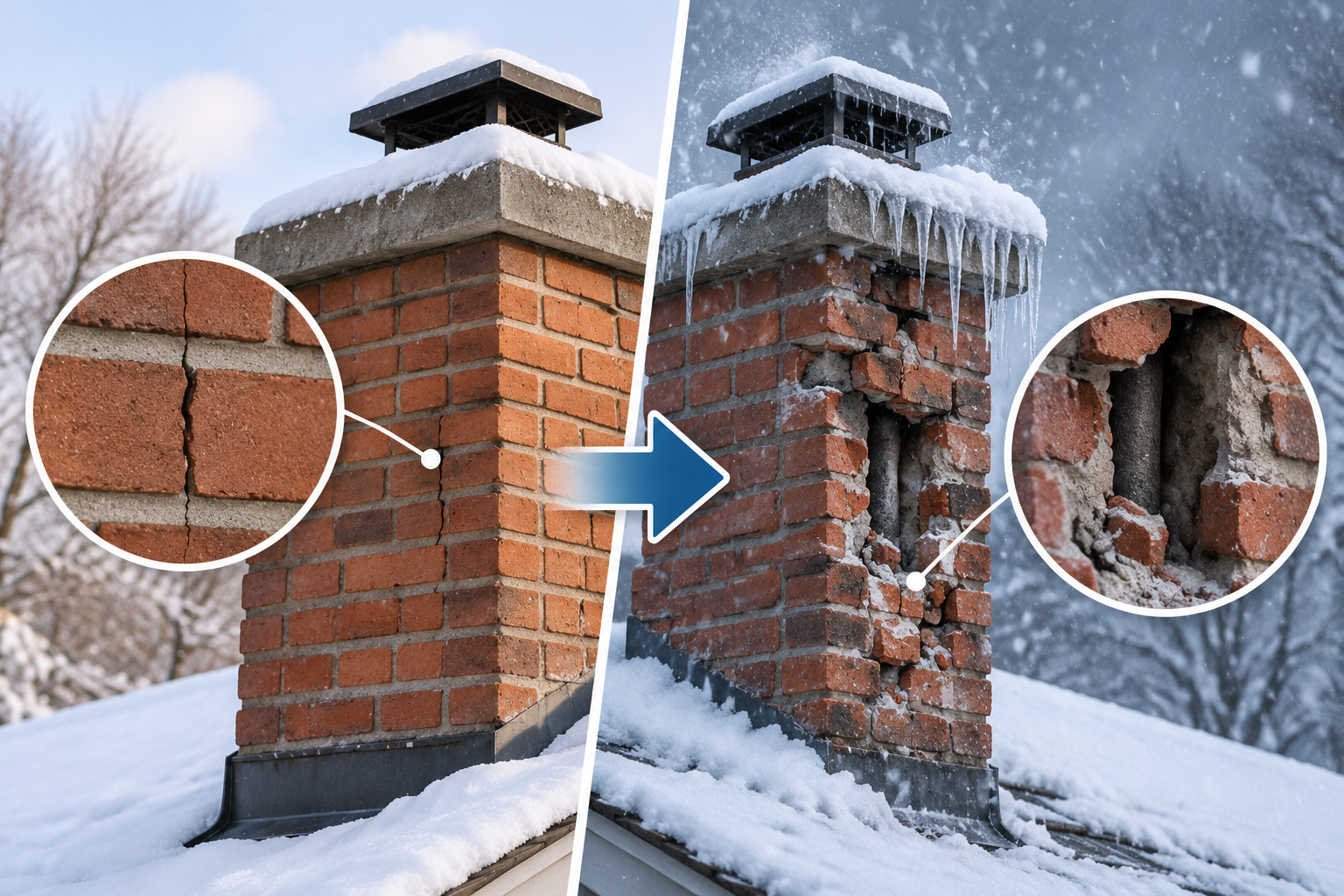
A small crack in a chimney may not seem like a big concern when you first notice it. It might look like a thin line in the mortar, a tiny opening near the chimney crown, or a small crack in one of the bricks. Many homeowners put off repairs because the damage does not appear serious enough to require immediate attention.
That can change once winter arrives. Water can enter small cracks and porous masonry, then freeze when temperatures drop. Frozen water expands and puts pressure on the surrounding material. After repeated freezing and thawing, a small crack can become wider and allow even more moisture to enter the chimney.
For property owners looking for chimney repair services Provincetown MA, checking these problems before the coldest part of the year can help prevent a minor masonry issue from turning into a much larger repair. This is especially useful in coastal areas where chimneys are exposed to rain, wind, snow, and changing temperatures throughout the year.
Why Small Chimney Cracks Matter
A chimney spends most of its life exposed to outdoor conditions. Rain can reach the brick, mortar, chimney crown, flashing, and cap. When these areas develop cracks or openings, water has an easier path into the masonry.
Brick and mortar are not completely waterproof. They can absorb moisture, especially when older masonry has already started to wear down. If that moisture freezes, the water expands inside the material and creates pressure. Repeated cycles can cause the surface to crack, chip, loosen, or break.
The National Apartment Association notes that moisture can contribute to masonry deterioration and that freezing and thawing can make existing problems worse.
This is why the size of a crack does not tell the whole story. A small crack in a dry area may remain stable for some time, while a small opening that allows repeated water entry can become a much larger concern.
How Winter Weather Affects Masonry
Winter does not damage every chimney in the same way. The condition of the masonry, amount of moisture exposure, age of the chimney, quality of previous repairs, and number of freezing cycles can all affect how quickly damage develops.
Imagine that rain enters a small crack in October. The water remains inside the masonry until a cold night arrives. When temperatures fall below freezing, that water turns to ice and expands. When temperatures rise again, the ice melts and leaves room for more water to enter.
The same process can happen again and again during winter. Over time, the repeated pressure can weaken mortar joints and damage the outer surface of bricks.
This is one reason chimney maintenance should not be treated as a cosmetic issue. A crack may be a sign that moisture is already reaching parts of the masonry that should remain protected.
Cracks Can Allow More Water Inside
A chimney crack creates an opening that water can use. Even a narrow crack can become a problem if rain or melting snow repeatedly enters the same area.
Once water gets into the masonry, it may move beyond the visible crack. Moisture can reach nearby mortar joints, bricks, or sections below the chimney crown. If those areas freeze later, the damage can spread beyond the original location.
This is also why filling a crack without finding the cause may provide only a short term fix. If water is entering through a damaged crown or another opening, the same problem can return after the next period of bad weather.
A proper inspection looks at the surrounding chimney instead of focusing only on the most noticeable crack.
The Chimney Crown Needs Attention
The chimney crown is located at the top of a masonry chimney and helps direct water away from the structure. When the crown is cracked, worn, or poorly shaped, water can collect or enter areas that should remain dry.
A damaged crown can become a serious concern during winter. Water that enters a crown crack may freeze and expand, putting pressure on the surrounding concrete or masonry. Repeated exposure can cause additional cracking and surface damage.
Building maintenance guidance also identifies damaged chimney caps and crowns as possible sources of water entry and masonry deterioration.
Look closely for cracks across the crown, broken edges, areas where water can collect, or gaps around the flue. If you cannot safely reach the chimney, have a professional inspect it rather than climbing onto the roof yourself.
Signs Your Chimney Needs Attention
Some chimney damage is easy to spot from the ground. Other problems may become visible only after a close inspection.
Watch for signs such as:
- New cracks in brick or mortar
- Crumbling mortar joints
- Bricks that are breaking or flaking
- White powder on the masonry
- Loose pieces of brick around the chimney
- Water stains near the fireplace
- Cracks across the chimney crown
- Damaged chimney caps
- Gaps near the flashing
- Masonry that appears to be separating or shifting
White powder on the surface can be a sign of moisture moving through masonry. This is commonly known as efflorescence. It does not prove that a serious structural problem exists, but it can tell you that water is moving through an area where it should not be.
If you notice several of these signs at the same time, arranging a professional inspection is a good idea.
Why Freeze And Thaw Cycles Cause Problems
The freeze and thaw cycle is simple to understand. Water enters the chimney, temperatures fall, the water freezes, and the ice expands. When temperatures rise, the ice melts and the masonry is exposed to moisture again.
One cycle may not cause visible damage. The concern comes from repeated cycles over time.
Older chimneys can be more exposed to this problem because mortar may already be worn and bricks may have absorbed years of moisture. A chimney with existing cracks has even more opportunities for water to enter.
This does not mean that every crack will lead to major structural damage. The location and cause of the crack matter. Still, a crack should not be ignored simply because it looks small from the ground.
When Should You Get A Chimney Inspection?
A new crack is a good reason to have the chimney checked, especially if it appears after a period of heavy rain, snow, or freezing temperatures.
A chimney inspection service Provincetown MA can help identify visible masonry damage, deteriorated mortar, crown problems, water entry, and other conditions that may need attention. A professional can also look for damage that may not be obvious from ground level.
The Chimney Safety Institute of America provides inspection guidance that includes checking masonry chimneys for signs of water entry, leakage, and other conditions affecting the chimney system.
An inspection can be especially helpful if you notice water stains inside the home, loose masonry outside, repeated cracks in the same area, or damage around the chimney crown.
What Happens If You Ignore The Crack?
Ignoring a small crack does not always lead to major damage. Some cracks remain stable for years. The problem is that homeowners often cannot tell from appearance alone whether a crack is stable or allowing moisture into the masonry.
If water continues entering the same area, the mortar may deteriorate around the crack. Bricks can begin to break down at the surface. The affected area may then allow even more water to enter.
Over time, a repair that could have been limited to a small section may become more involved.
The chimney may need additional masonry repair, replacement of damaged bricks, crown work, mortar repair, or correction of another source of water entry. The final cost depends on how much damage has occurred and what caused it in the first place.
Can A Small Crack Affect The Roof?
Yes, depending on where the crack is located and how water is entering the chimney. The area where the chimney passes through the roof deserves particular attention. Flashing around the chimney helps keep water from entering the roof opening. If flashing is damaged or the surrounding masonry has deteriorated, water may reach the roof structure.
A chimney problem can therefore involve more than the chimney itself.
If you notice water stains on ceilings or walls near the chimney, do not automatically assume the problem is coming from the roof shingles. The chimney crown, flashing, masonry, and other areas should also be checked.
Finding the source early can help prevent moisture from affecting additional building materials.
Should You Repair The Crack Yourself?
A homeowner may be able to notice a crack, but deciding how to repair it is another matter.
Different chimney materials require different repair methods. Mortar joints, bricks, concrete crowns, flashing, and chimney caps do not all require the same type of work.
A general patching material may cover a crack for a short period without solving the reason it appeared. If water is still entering the chimney, the damage may return.
Professional chimney repair services can help identify whether the problem involves the mortar, brick, crown, cap, flashing, or another part of the chimney.
Safety is another reason to avoid difficult chimney repairs yourself. Working on a roof or climbing near a chimney can lead to falls, especially when surfaces are wet, icy, or covered with snow.
When Is Chimney Damage More Serious?
Not every crack requires an emergency repair, but some signs deserve prompt attention.
A crack that is growing quickly is more concerning than an old crack that has remained unchanged. Loose bricks, falling masonry, major water stains, a visibly leaning chimney, or large sections of deteriorated mortar should not be ignored.
You should also pay attention to pieces of brick or mortar found on the roof or ground. Falling masonry can indicate that the chimney surface is breaking down.
If the chimney appears to be separating from the house or has visible movement, stop using the fireplace until a qualified professional can evaluate the condition.
How To Prepare Your Chimney For Winter
The best time to address chimney cracks is before repeated freezing weather begins. Fall gives property owners an opportunity to look for damage and arrange repairs while outdoor conditions are still easier to work in.
Start by checking the chimney from a safe location. Look for visible cracks, loose bricks, damaged mortar, crown cracks, and signs of water entry.
If you notice something unusual, arrange an inspection instead of waiting to see what happens during winter.
A simple seasonal check can include:
- Look for new cracks in brick and mortar.
- Check for loose or damaged masonry.
- Look for cracks or damage around the chimney crown.
- Check visible flashing areas for gaps or damage.
- Look for water stains inside the property.
- Arrange professional repairs before freezing weather becomes frequent.
Regular maintenance does not mean every chimney needs the same repair schedule. Older masonry and chimneys with previous water problems may need closer attention.
Why Early Masonry Repairs Make Sense
Repairing a small masonry problem early can be easier than repairing a larger damaged section later.
Suppose a mortar joint has started to deteriorate. If the problem is addressed early, the damaged area may be limited. If water continues entering the joint through several seasons, nearby bricks and mortar may also begin to deteriorate.
The same idea applies to chimney crowns and caps. A small opening can allow water to enter repeatedly. Repairing the source of the water entry can help protect the masonry below it.
Good chimney repair services Provincetown MA should focus on the cause of the damage, not simply make the visible crack disappear.
That means looking at the chimney as a complete structure and checking the areas around the damaged section.
What Should You Ask A Masonry Contractor?
Before hiring a contractor, ask what may have caused the crack and whether there are signs of related water damage.
You can also ask whether the affected bricks or mortar need repair, whether the chimney crown needs attention, and whether the flashing or chimney cap should be checked.
A good contractor should be able to explain the problem in simple terms. You should understand what needs to be repaired, why the repair is needed, and what may happen if the damage is left untreated.
For older homes, it can also help to ask whether the repair materials are suitable for the existing masonry. Using the wrong mortar or repair method can create additional problems.
Conclusion
Could a tiny chimney crack become a costly problem after repeated winter weather? Yes, especially when water enters the masonry and freezes several times during the season. The crack itself may not be the biggest concern. The moisture getting behind it and the repeated freezing and thawing can cause surrounding brick and mortar to deteriorate. For property owners who need chimney repair services Provincetown MA, checking the chimney before winter can give you a better chance of addressing small problems before they spread.
Diamond Touch Masonry provides expert masonry services for property owners who need professional help with chimney and masonry problems. Their team can assess damaged areas and recommend the right repair based on the condition of the existing structure. Taking care of chimney damage early can help protect the property and reduce the chance of facing a much larger repair after the next harsh winter.
Frequently Asked Questions
Can winter make a small chimney crack worse?
Yes. Moisture can enter the crack and freeze during cold weather. As the water freezes and expands, it can place pressure on the surrounding masonry. Repeated freezing and thawing can contribute to further deterioration.
Does every chimney crack need to be repaired?
Not every crack means the chimney has serious structural damage. However, the cause and location should be checked before deciding that a crack can safely be ignored. A professional inspection can help determine whether the crack needs repair.
How does water get into a chimney?
Water can enter through cracks in bricks or mortar, damaged chimney crowns, open joints, damaged caps, and problems around flashing. Poor drainage at the top of the chimney can also allow water to remain in areas where it can enter the masonry.
What is the best time to inspect a chimney?
Fall is often a convenient time to check the chimney before winter weather becomes frequent. If you notice a new crack or signs of water damage at any time of year, it is better to have the problem checked rather than waiting for the next season.
Can a cracked chimney crown cause leaks?
Yes. A damaged crown can allow rain and melting snow to reach parts of the chimney that should remain protected. Freezing temperatures can then make existing crown damage worse.
How can I tell if chimney damage is serious?
Large cracks, loose bricks, falling masonry, major water stains, visible movement, or a leaning chimney deserve prompt professional attention. Repeated cracking in the same area is also a reason to have the chimney inspected.
Can chimney repair prevent winter damage?
Proper repair can address cracks and other openings that allow water into the masonry. While no repair can control the weather, correcting known sources of water entry can reduce the chance of moisture related deterioration.