
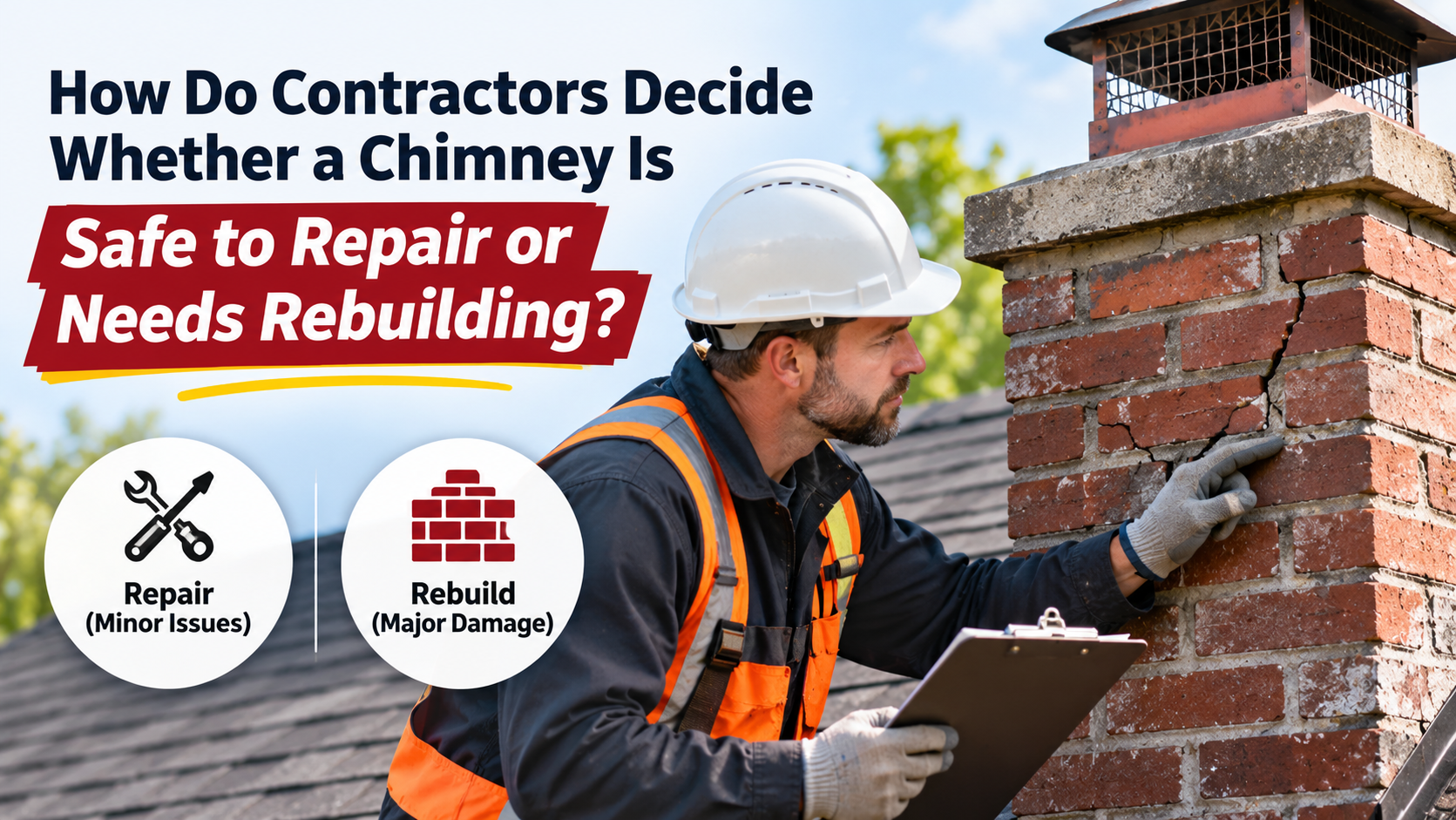
A chimney can look fine from the ground but have serious damage near the roofline, inside the flue, or behind its brickwork. Small cracks, loose mortar, and water stains may point to repair needs. However, a leaning chimney, damaged foundation, or major structural failure may call for a complete rebuild.
For homeowners in Truro, Mashpee, and other Cape Cod communities, knowing the difference can help prevent safety problems and avoid paying for work that does not address the main issue. Chimney rebuild contractors in Truro, MA inspect several parts of the chimney before recommending a repair or replacement. Their decision depends on the condition of the masonry, the flue liner, the chimney’s support, and the extent of the damage.
What Do Contractors Check During a Chimney Inspection?
A contractor should examine the chimney from the outside and inside before deciding what work it needs. Looking at the bricks from the ground is not enough to judge its condition.
A proper inspection may cover these areas:
- Brickwork: Contractors look for cracked, loose, missing, or damaged bricks.
- Mortar joints: They check whether the mortar is crumbling, missing, or pulling away from the masonry.
- Chimney crown: This is the top surface that helps keep rain and snow out of the chimney structure.
- Flashing: They inspect the metal connection between the chimney and roof for gaps or water entry.
- Flue liner: They check for cracks, gaps, missing sections, or other damage inside the passage that carries smoke and gases.
- Chimney base: They look for signs of movement, settlement, or damage near the foundation.
Massachusetts fire safety guidance warns that cracks in flues and mortar joints can allow flames and heated gases to enter the home. It also recommends having chimneys and flues inspected each year. Massachusetts Department of Fire Services.
When Is Chimney Repair Enough?
A chimney does not always need to be rebuilt when contractors find damage. If the main structure remains stable and the problem affects only a limited area, targeted repairs may be suitable.
Here are some common examples.
1. Damaged or Missing Mortar
Mortar holds the bricks together. Rain, freezing temperatures, and age can cause it to crack or wear away.
If the damage is limited to the joints and the bricks remain in good condition, a contractor may recommend repointing. This involves removing damaged mortar and filling the joints with suitable new mortar.
Repointing can help restore the masonry joints without removing the entire chimney.
2. Small Cracks in the Chimney Crown
The chimney crown protects the top of the masonry from water. Cracks can allow moisture to enter and damage the structure.
If the crown is damaged but the chimney walls remain stable, contractors may be able to repair or replace the crown without rebuilding the entire chimney.
3. A Few Loose or Damaged Bricks
Individual bricks may crack, loosen, or break due to moisture exposure or physical damage. If only a small section is affected, a mason may remove and replace those bricks.
The contractor should also check why the bricks failed. Replacing them without addressing water entry or another underlying problem may lead to more damage.
4. Flashing or Water Entry Problems
Damaged flashing can allow rainwater to enter where the chimney meets the roof. This may cause stains, damp masonry, or leaks inside the home.
If the chimney structure is still sound, repairing the flashing and any limited water damage may be enough.
When Does a Chimney Need a Complete Rebuild?
A full rebuild becomes more likely when damage affects the chimney’s stability or a large part of its structure. In these cases, patching individual areas may not provide a safe long-term result.
1. The Chimney Is Leaning or Moving
A chimney that leans away from the house or shows signs of movement needs a serious structural assessment. The problem may involve a damaged foundation, failed masonry, or poor support.
Contractors must determine why the chimney is moving before recommending work. If the structure cannot safely support itself, rebuilding may be necessary.
2. Large Sections of Brickwork Are Damaged
A few damaged bricks can often be replaced. However, widespread cracks, loose sections, missing masonry, and failing mortar across several areas may point to deeper structural problems.
If large parts of the chimney have lost their stability, a full rebuild may be safer than repeated patching.
3. The Flue Liner Has Serious Damage
The flue liner helps contain heat, smoke, and combustion gases as they leave the home. Cracks, gaps, or missing sections can allow dangerous gases and heat to escape into nearby building materials.
Depending on the damage, contractors may recommend a liner repair, replacement liner, or a larger chimney reconstruction. A damaged liner does not automatically mean the entire chimney must be rebuilt. The inspection must show whether the surrounding masonry is still suitable for use.
4. A Chimney Fire Has Caused Structural Damage
A chimney fire can expose the flue and surrounding masonry to intense heat. Damage may include cracked flue tiles, failed mortar joints, warped metal parts, or structural cracks.
The Chimney Safety Institute of America advises homeowners not to use a chimney after a suspected chimney fire until a qualified professional has evaluated it. An internal video inspection can help reveal damage that is not visible from the fireplace or roof.
Read the CSIA guide to what happens after a chimney fire for more information.
5. Water Damage Has Spread Through the Structure
Long-term water entry can damage bricks and mortar throughout a chimney. In colder weather, moisture trapped in masonry can freeze and expand, causing further cracking and surface damage.
If the damage is widespread, contractors may find that repairing one section will not solve the problem. They may recommend rebuilding the affected portion or the entire chimney, depending on its condition.
Repair vs. Rebuild: What Is the Difference?
The final recommendation depends on how much of the chimney is damaged and whether the remaining structure is safe.
| Inspection Finding | Possible Recommendation |
| Minor mortar damage | Repointing |
| A few cracked bricks | Brick replacement |
| Small crown cracks | Crown repair |
| Damaged roof flashing | Flashing repair |
| Damaged flue liner | Liner repair or replacement |
| Widespread masonry failure | Partial or full rebuild |
| Severe leaning or structural instability | Structural assessment and possible rebuild |
| Major damage after a chimney fire | Detailed inspection and repair or rebuild plan |
This table provides general examples. A contractor must inspect the chimney before deciding which option is suitable.
Why Do Contractors Use Video Inspections?
Some chimney damage cannot be seen by looking outside. The inside of the flue may contain cracks, gaps, damaged tiles, or other defects.
A video inspection uses a small camera to examine the flue from the inside. It allows the inspector to record areas that would otherwise be difficult to view.
The Chimney Safety Institute of America describes video scanning as part of a Level 2 inspection for masonry chimneys. This inspection may be recommended after a chimney fire, a major weather event, a change in heating equipment, or when a basic inspection cannot determine whether the system is suitable for continued use.
You can review the CSIA Level 2 masonry chimney inspection guide.
How Does Cape Cod Weather Affect Chimney Condition?
Chimneys in Truro, Mashpee, and other Cape Cod areas face regular exposure to rain, wind, snow, and changing temperatures. Coastal properties may also experience salt exposure.
These conditions can affect exterior masonry, metal flashing, chimney crowns, and mortar joints. Water entry is a common concern because moisture can damage masonry and cause repeated repairs if the source is not fixed.
Homeowners should watch for:
- Loose or crumbling mortar.
- Bricks that appear cracked or chipped.
- Water stains near the fireplace or chimney.
- Pieces of brick or mortar on the roof.
- Rust around metal components.
- A chimney that appears to lean or separate from the house.
If you notice these signs, arrange an inspection instead of waiting for the damage to spread.
Questions to Ask Before Hiring a Chimney Contractor
Before approving a repair or rebuild, ask the contractor to explain the inspection results. A clear estimate should describe the damage, the recommended work, and why that option is suitable.
Consider asking:
- Which parts of the chimney are damaged?
- Is the damage limited to the exterior masonry, or does it affect the flue?
- Can the existing structure remain in use after repairs?
- Why do you recommend repair instead of rebuilding, or the other way around?
- Will you provide photographs of the damaged areas?
- Are permits or inspections required for the proposed work?
- What materials will be used, and what parts of the chimney are included in the estimate?
When comparing chimney rebuild contractors in Truro, MA, look for clear inspection findings and a written explanation of the proposed work. A low estimate may not be a good choice if it leaves serious damage untreated.
How to Choose the Right Repair or Rebuild Service
A good contractor should explain what is wrong before recommending a solution. Ask for photographs, a written scope of work, and details about the materials being used.
If the chimney needs major work, ask whether the estimate covers removal, rebuilding, masonry materials, flashing, and cleanup. Also check whether the contractor has experience with the type of chimney on your property.
Homeowners comparing chimney rebuild contractors in Barnstable, MA should use the same approach. The contractor should explain whether a partial repair can address the damage or whether the chimney needs more extensive work.
A chimney rebuild service should address the reason the structure failed, not just replace the visible bricks. If water caused the damage, for example, the work should also address the source of water entry.
Conclusion
Is your chimney showing cracks, loose bricks, or signs of water damage? Before deciding between a repair and a full rebuild, have the structure, flue, and foundation checked by a qualified professional. A small masonry problem may need only targeted repairs, while serious structural damage may require rebuilding to restore safe use.
Diamond Touch Masonry provides expert masonry services for property owners who need help with chimney repairs and rebuilding. If your home is in Truro, Mashpee, or another Cape Cod community, discuss the inspection findings and repair options with the team before starting the work.
Frequently Asked Questions
1. Can a cracked chimney be repaired without rebuilding it?
Yes. Small cracks or limited mortar damage may be repaired if the chimney remains structurally sound. Large cracks, movement, or widespread masonry damage require a more detailed assessment.
2. How do contractors know if a chimney is unsafe?
They inspect the brickwork, mortar joints, crown, flashing, flue liner, and foundation. They may also use a camera to examine the inside of the flue.
3. Does a damaged chimney liner mean I need a new chimney?
No. A damaged liner may be repaired or replaced while keeping the existing masonry structure. The contractor must check whether the surrounding chimney is still in good condition.
4. Should I use my fireplace if the chimney has cracks?
Do not use the fireplace until a qualified chimney professional has checked the damage and confirmed that the system is safe. Cracks in the flue or mortar joints can allow heat and combustion gases to escape.
5. How often should a chimney be inspected?
The Massachusetts Department of Fire Services recommends annual chimney and flue inspections. Regular checks can help identify damage before it becomes more serious.
6. Is rebuilding always more expensive than repairing?
A full rebuild often involves more labor and materials than a small repair. However, repeated repairs to a badly damaged chimney can add up. The right choice depends on the inspection findings and the amount of work required.