
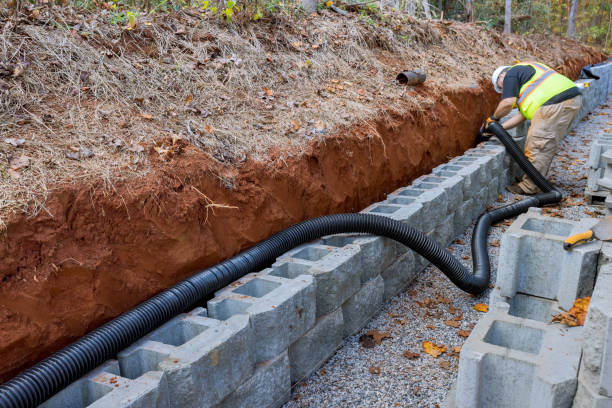
Building a retaining wall is not only about placing stones or pouring concrete. In a coastal area like Dennis, Massachusetts, drainage has a strong impact on how long the wall stays in good condition and how safely it performs. If water is not managed the right way, the wall can crack, tilt, or even fall apart. That is why it is important to understand drainage needs before starting any retaining wall installation in Dennis, MA.
This guide explains how drainage works behind retaining walls, how local weather and soil affect your project, and what steps help protect your investment for the long term.
Why Drainage Is Important for Retaining Walls
Water is one of the main reasons retaining walls fail. When soil gets filled with water, it becomes heavy and pushes against the wall. This pressure is known as hydrostatic pressure. Over time, this force can weaken the structure and cause damage.
If water cannot escape, even a well built wall may shift or break. A proper drainage setup allows water to move away from the wall and reduces this pressure.
Walls with poor drainage often show signs such as bending, cracking, or water collecting near the base. In many cases, these problems lead to expensive fixes or full replacement.
Soil and Weather Conditions in Dennis, MA
Dennis is located on Cape Cod, where sandy soil is common. Sandy soil drains water faster than clay, but it can still hold moisture during heavy rain. The area also experiences storms and freezing weather, which affect how drainage systems should be designed.
Sandy soil can move easily, which increases the risk of erosion. Heavy rainfall can add extra water behind the wall. During colder months, water trapped in the soil can freeze and expand, putting pressure on the wall structure.
Because of these conditions, every retaining wall installation in Dennis, MA should include a drainage plan that handles both water flow and soil movement.
Main Parts of a Drainage System
A good drainage system includes several layers that work together to move water away from the wall.
Gravel is placed behind the wall to help water flow freely. Instead of trapping moisture, gravel allows it to pass through quickly. This reduces pressure and supports the strength of the wall.
A perforated pipe is usually placed at the bottom of the wall. This pipe collects water and directs it away from the structure. It must be installed at the right angle so water can move through it easily.
Filter fabric is added between soil and gravel. This layer stops dirt from mixing with the gravel and blocking water flow. Without it, the drainage system may stop working over time.
Some walls also include small openings that let water escape. These openings help release pressure and prevent buildup behind the wall.
It is also important to manage water on the surface. Proper grading of the land ensures that water flows away from the wall instead of toward it.
How Drainage Changes Based on Wall Type
Different types of retaining walls require different drainage methods.
Segmental block walls use interlocking blocks and rely on gravel and drainage pipes. These walls allow a small amount of water to pass through joints, but still need proper drainage behind them.
Concrete walls are solid and do not allow water to pass through. This means drainage must be carefully planned. Without it, pressure can build quickly and cause damage.
Natural stone walls may allow a small amount of water to pass through gaps, but they still need gravel and proper drainage systems to stay stable.
Steps to Install Proper Drainage
The process of installing drainage follows a clear sequence to make sure everything works correctly.
The area behind the wall is first excavated to create space for drainage materials. A strong base is prepared using compacted gravel. A perforated pipe is then installed at the bottom. After that, filter fabric is placed to separate soil and gravel. Gravel is added behind the wall to support water movement. The wall is then built, and the surface is shaped so water flows away from it.
Each step plays an important role in keeping the wall strong and stable.
Signs of Drainage Problems
Retaining walls with poor drainage often show warning signs. You may notice water leaking through cracks or soil washing out from behind the wall. Sometimes the wall may lean forward or show stains caused by moisture. Water pooling near the base is another common issue.
If you see any of these problems, it may be time for retaining wall repair to prevent further damage.
Cost of Adding Drainage
Adding drainage increases the cost of building a retaining wall, but it helps avoid expensive repairs later. The total cost depends on factors such as the height of the wall, the type of soil, the length of the drainage pipe, and the level of labor required.
Although it may seem like an extra expense, proper drainage is a smart investment for any retaining wall installation in Dennis, MA.
Local Rules and Permits
In Massachusetts, some retaining walls require permits, especially if they are above a certain height. Drainage may also be checked during inspections. It is always a good idea to follow local building rules and work with experienced professionals.
Connection with Other Outdoor Projects
Drainage planning is not limited to retaining walls. It also affects other outdoor features like patios and walkways. If water is not managed properly, it can damage nearby structures.
Many property owners plan multiple improvements at the same time. For example, combining a retaining wall with patio installation services in Dennis, MA helps create a well balanced outdoor space where water flows correctly across the entire area.
Maintenance for Long Term Performance
After installation, regular care helps keep the drainage system working. Checking drainage outlets, removing debris, and watching for soil movement can prevent problems. It is also helpful to inspect the wall after heavy rain to make sure water is flowing properly.
Simple maintenance steps can extend the life of the wall and reduce the need for repairs.
Common Mistakes to Avoid
Some common mistakes include using soil instead of gravel behind the wall, skipping the drain pipe, and grading the land in a way that directs water toward the wall. Another issue is not using filter fabric, which can lead to blocked drainage over time.
Avoiding these mistakes helps protect your investment and ensures the wall performs as expected.
Choosing the Right Contractor
Selecting the right contractor is an important part of the process. When planning retaining wall installation in Dennis, MA, look for someone who understands local soil and weather conditions. Experience with drainage systems is just as important as building skills.
A good contractor will explain how water will be managed and ensure the design supports long term stability.
Conclusion
Are you planning a retaining wall and thinking about how to make it last in Dennis, MA? The answer begins with proper drainage. Without it, water can build up and damage even the strongest structure. A well planned system keeps your wall stable and protects your outdoor space.
Diamond Touch Masonry is known for providing expert masonry services with a focus on quality and durability. Whether you need a new wall or retaining wall repair, their team understands how to manage drainage in local conditions and deliver reliable results.
FAQ Section
What is the main purpose of drainage behind a retaining wall?
Drainage reduces water pressure and prevents structural damage.
Do all retaining walls need drainage systems?
Yes, especially in areas with rain and changing temperatures like Dennis, MA.
How deep should gravel backfill be?
Most projects use 12 to 18 inches, depending on wall size.
Can poor drainage cause wall failure?
Yes, water pressure is one of the leading causes of wall collapse.
How often should drainage systems be checked?
At least once a year, or after heavy storms.
Is drainage included in all wall installations?
Not always, so it is important to confirm with your contractor.